

Message Board

Respected readers, authors and reviewers, you can add comments to this page on any questions about the contribution, review, editing and publication of this journal. We will give you an answer as soon as possible. Thank you for your support!

Name
E-mail
Phone
Title
Content
Verification Code
Volume 17 Issue 3
Jun.  2026
Turn off MathJax
Article Contents

Zhao Aote, Lin Huiting, Zhang Yuting, Huang Xiaolong, Wu Wenqiang, Xia Wei, Huang Dongyi. Identification and characteristic analysis of BBR-BPC gene family in greater yam (Dioscorea alata L.)[J]. Journal of Tropical Biology, 2026, 17(3): 390-398. doi: 10.15886/j.cnki.rdswxb.20250026
Citation: Zhao Aote, Lin Huiting, Zhang Yuting, Huang Xiaolong, Wu Wenqiang, Xia Wei, Huang Dongyi. Identification and characteristic analysis of BBR-BPC gene family in greater yam (Dioscorea alata L.)[J]. Journal of Tropical Biology, 2026, 17(3): 390-398. doi: 10.15886/j.cnki.rdswxb.20250026

Identification and characteristic analysis of BBR-BPC gene family in greater yam (Dioscorea alata L.)

doi: 10.15886/j.cnki.rdswxb.20250026 cstr: 32425.14.j.cnki.rdswxb.20250026
  • Received Date: 2025-02-04
  • Accepted Date: 2025-02-28
  • Rev Recd Date: 2025-02-22
  • Available Online: 2026-05-20
  • Publish Date: 2026-05-25
  • In order to understand the regulatory role of the BBR-BPC gene family in the growth and development of Dioscorea alata (greater yam), we analyzed the gene structure, phylogenetic evolution, conserved motifs, and physicochemical properties of the BBR-BPC gene family in greater yam. We also predicted the secondary and tertiary structures of BBR-BPC proteins and verified the interaction between the BBR-BPC gene and the DELLA gene. Through HMMsearch and BLAST analyses, we identified six members of the BBR-BPC family in the greater yam genome. These gene proteins exhibited significant differences and alternative splicing events, with a total of 10 splice variants detected. Subcellular localization analysis revealed that all members of the BBR-BPC family in greater yam are located in the nucleus.The yeast two-hybrid interaction results between Da4BBR-BPC2 and DaDELLA2 indicate that there is an interaction between Da4BBR-BPC2 and DaDELLA2, occurring at the N-terminus of the DaDELLA2 gene.
  • [1] 索宁宁, 张艳芳, 高圆丽, 等. 山药块茎膨大期淀粉积累及淀粉合成相关基因表达分析[J]. 中国瓜菜, 2023, 36 (3): 69−76. https://doi.org/10.3969/j.issn.1673-2871.2023.03.012 doi:  10.3969/j.issn.1673-2871.2023.03.012
    [2] 夏薇, 吴文嫱, 许云, 等. 大薯种质资源多样性研究进展[J]. 植物生理学报, 2017, 53 (5): 781−784.
    [3] 张青, 赵景梅, 黄东益, 等. 大薯病程相关蛋白1(PR1)基因及其启动子序列的克隆与分析[J]. 分子植物育种, 2018, 16 (7): 2078−2084.
    [4] 刘林娅, 黄亚成, 黄小龙, 等. 薯蓣植物块茎特异蛋白Dioscorin的研究进展[J]. 植物学报, 2016, 51 (2): 274−280. https://doi.org/10.11983/CBB15072 doi:  10.11983/CBB15072
    [5] Zhu J K. Abiotic stress signaling and responses in plants [J]. Cell, 2016, 167(2): 313−324. https://doi.org/10.1016/j.cell.2016.08.029 doi:  10.1016/j.cell.2016.08.029
    [6] 龚蓉. 水稻OsGBP转录因子家族基因的功能研究及雌雄配子不育基因MFS的定位与功能分析 [D]. 武汉: 华中农业大学, 2018.
    [7] 赵东波, 管培燕, 郭智慧, 等. 玉米BBR-BPC基因家族全基因组鉴定及表达分析[J]. 玉米科学, 2023, 31 (3): 58−66.
    [8] Lee Y C, Tsai P T, Huang X X, et al. Family members additively repress the ectopic expression of BASIC PENTACYSTEINE3 to prevent disorders in Arabidopsis circadian vegetative development [J]. Frontiers in Plant Science, 2022, 13: 919946. https://doi.org/10.3389/fpls.2022.919946 doi:  10.3389/fpls.2022.919946
    [9] Theune M L, Bloss U, Brand L H, et al. Phylogenetic analyses and GAGA-motif binding studies of BBR/BPC proteins lend to clues in GAGA-motif recognition and a regulatory role in brassinosteroid signaling [J]. Frontiers in Plant Science, 2019, 10: 466. https://doi.org/10.3389/fpls.2019.00466 doi:  10.3389/fpls.2019.00466
    [10] Mishra K, Chopra V S, Srinivasan A, et al. Trl-GAGA directly interacts with Lola like and both are part of the repressive complex of Polycomb group of genes [J]. Mechanisms of Development, 2003, 120(6): 681−689. https://doi.org/10.1016/S0925-4773(03)00046-7 doi:  10.1016/S0925-4773(03)00046-7
    [11] Ogiyama Y, Schuettengruber B, Papadopoulos G L, et al. Polycomb-dependent chromatin looping contributes to gene silencing during Drosophila development [J]. Molecular Cell, 2018, 71(1): 73−88. https://doi.org/10.1016/j.molcel.2018.05.032 doi:  10.1016/j.molcel.2018.05.032
    [12] Lang D, Weiche B, Timmerhaus G, et al. Genome-wide phylogenetic comparative analysis of plant transcriptional regulation: a timeline of loss, gain, expansion, and correlation with complexity [J]. Genome Biology and Evolution, 2010, 2: 488−503. https://doi.org/10.1093/gbe/evq032 doi:  10.1093/gbe/evq032
    [13] Wanke D, Hohensxtatt M L, Dynowski M, et al. Alanine zipper-like coiled-coil domains are necessary for homotypic dimerization of plant GAGA-factors in the nucleus and nucleolus [J]. PLoS One, 2011, 6(2): e16070. https://doi.org/10.1371/journal.pone.0016070 doi:  10.1371/journal.pone.0016070
    [14] Santi L, Wang Y, Stile M R, et al. The GA octodinucleotide repeat binding factor BBR participates in the transcriptional regulation of the homeobox gene Bkn3 [J]. Plant Journal, 2010, 34(6): 813−826.
    [15] Monfared M M, Simon M K, Meister R J, et al. Overlapping and antagonistic activities of BASIC PENTACYSTEINE genes affect a range of developmental processes in Arabidopsis [J]. The Plant Journal, 2011, 66(6): 1020−1031. https://doi.org/10.1111/j.1365-313X.2011.04562.x doi:  10.1111/j.1365-313X.2011.04562.x
    [16] Hecker A, Brand L H, Peter S, et al. The Arabidopsis gaga-Binding factor basic pentacysteine6 recruits the polycomb-repressive complex1 component like heterochromatin protein1 to Gaga DNA motifs [J]. Plant Physiology, 2015, 168(3): 1013−1024. https://doi.org/10.1104/pp.15.00409 doi:  10.1104/pp.15.00409
    [17] Simonini S, Kater M M. Class I BASIC PENTACYSTEINE factors regulate HOMEOBOX genes involved in meristem size maintenance [J]. Journal of Experimental Botany, 2014, 65(6): 1455−1465. https://doi.org/10.1093/jxb/eru003 doi:  10.1093/jxb/eru003
    [18] Mu Y, Zou M, Sun X, et al. BASIC PENTACYSTEINE proteins repress ABSCISIC ACID INSENSITIVE4 expression via direct recruitment of the polycomb-repressive complex 2 in Arabidopsis root development [J]. Plant & Cell Physiology, 2017, 58(3): 607−621.
    [19] Meister R J, Williams L A, Monfared M M, et al. Definition and interactions of a positive regulatory element of the Arabidopsis INNER NO OUTER promoter [J]. Plant Journal, 2004, 37(3): 426−438. https://doi.org/10.1046/j.1365-313X.2003.01971.x doi:  10.1046/j.1365-313X.2003.01971.x
    [20] Kooiker M, Airoldi C A, Losa A, et al. BASIC PENTACYSTEINE1 a GA binding protein that induces conformational changes in the regulatory region of the homeotic Arabidopsis gene SEEDSTICK [J]. The Plant Cell, 2005, 17(3): 722−729. https://doi.org/10.1105/tpc.104.030130 doi:  10.1105/tpc.104.030130
    [21] Simonini S, Roig-villanova I, GREGIS V, et al. Basic pentacysteine proteins mediate MADS domain complex binding to the DNA for tissue-specific expression of target genes in Arabidopsis [J]. Plant Cell, 2012, 24(10): 4163−4172. https://doi.org/10.1105/tpc.112.103952 doi:  10.1105/tpc.112.103952
    [22] Wu J, Mohamed D, Dowhanik S, et al. Spatiotemporal restriction of FUSCA3 expression by class I BPCs promotes ovule development and coordinates embryo and endosperm growth [J]. The Plant Cell, 2020, 32(6): 1886−1904. https://doi.org/10.1105/tpc.19.00764 doi:  10.1105/tpc.19.00764
    [23] Lao Z, Mao J, Chen R, et al. Genome-wide identification and characterization of BASIC PENTACYSTEINE transcription factors and their binding motifs in coconut palm [J]. Frontiers in Plant Science, 2024, 15: 1491139. https://doi.org/10.3389/fpls.2024.1491139 doi:  10.3389/fpls.2024.1491139
    [24] Wai A H, Divya D, Park J I, et al. Genome wide identification of BBP/BPC transcription factor in tomato and its expression profiling in response to abiotic stress [J]. Plant Biotechnology Reports, 2024, 18(6): 759−776. https://doi.org/10.1007/s11816-024-00927-z doi:  10.1007/s11816-024-00927-z
    [25] Berger N, Dubreucq B. Evolution goes GAGA: GAGA binding proteins across Kingdoms [J]. Biochimica et Biophysica Acta (BBA) - Gene Regulatory Mechanisms, 2012, 1819(8): 863−868. https://doi.org/10.1016/j.bbagrm.2012.02.022 doi:  10.1016/j.bbagrm.2012.02.022
    [26] Sun H, Pang B, Yan J, et al. Comprehensive analysis of cucumber gibberellin oxidase family genes and functional characterization of CsGA20ox1 in root development in Arabidopsis [J]. International Journal of Molecular Sciences, 2018, 19(10): 3135. https://doi.org/10.3390/ijms19103135 doi:  10.3390/ijms19103135
    [27] Sahu A, Singh R, Verma P K. Plant BBR/BPC transcription factors: unlocking multilayered regulation in development, stress and immunity [J]. Planta, 2023, 258(2): 31. https://doi.org/10.1007/s00425-023-04188-y doi:  10.1007/s00425-023-04188-y
    [28] Yang Q, Li B, Rizwan H M, et al. Genome-wide identification and comprehensive analyses of NAC transcription factor gene family and expression analysis under Fusarium kyushuense and drought stress conditions in Passiflora edulis [J]. Frontiers in Plant Science, 2022, 13: 972734. https://doi.org/10.3389/fpls.2022.972734 doi:  10.3389/fpls.2022.972734
    [29] Akond Z, Rahman H, Ahsan M A, et al. Comprehensive In silico analysis of RNA silencing-related genes and their regulatory elements in wheat (Triticum aestivum L.) [J]. BioMed Research International, 2022, 2022: 4955209. https://doi.org/10.1155/2022/4955209 doi:  10.1155/2022/4955209
    [30] 程文杰. 大薯种质资源遗传多样性分析 [D]. 海口: 海南大学, 2010.
    [31] Kumar D, Wareing P F. Factors controlling stolon development in the potato plant [J]. New Phytologist, 1972, 71(4): 639−648. https://doi.org/10.1111/j.1469-8137.1972.tb01274.x doi:  10.1111/j.1469-8137.1972.tb01274.x
    [32] Li W, Zhang J, Sun H, et al. FveRGA1, encoding a DELLA protein, negatively regulates runner production in Fragaria vesca [J]. Planta, 2018, 247(4): 941−951. https://doi.org/10.1007/s00425-017-2839-9 doi:  10.1007/s00425-017-2839-9
    [33] Zentella R, Zhang Z L, Park M, et al. Global analysis of della direct targets in early gibberellin signaling in Arabidopsis [J]. The Plant Cell, 2007, 19(10): 3037−3057. https://doi.org/10.1105/tpc.107.054999 doi:  10.1105/tpc.107.054999
    [34] Li S, Sun M, Miao L, et al. Multifaceted regulatory functions of CsBPC2 in cucumber under salt stress conditions [J]. Horticulture Research, 2023, 10(5): 142−154.
    [35] Zhao H, Wan S, Huang Y, et al. The transcription factor MdBPC2 alters apple growth and promotes dwarfing by regulating auxin biosynthesis [J]. The Plant Cell, 2024, 36(3): 585−604. https://doi.org/10.1093/plcell/koad297 doi:  10.1093/plcell/koad297
  • 加载中
通讯作者: 陈斌, bchen63@163.com
  • 1. 

    沈阳化工大学材料科学与工程学院 沈阳 110142

  1. 本站搜索
  2. 百度学术搜索
  3. 万方数据库搜索
  4. CNKI搜索

Figures(5)  / Tables(4)

Article views(1108) PDF downloads(33) Cited by()

Proportional views
Related

Identification and characteristic analysis of BBR-BPC gene family in greater yam (Dioscorea alata L.)

DOI: 10.15886/j.cnki.rdswxb.20250026

Abstract: In order to understand the regulatory role of the BBR-BPC gene family in the growth and development of Dioscorea alata (greater yam), we analyzed the gene structure, phylogenetic evolution, conserved motifs, and physicochemical properties of the BBR-BPC gene family in greater yam. We also predicted the secondary and tertiary structures of BBR-BPC proteins and verified the interaction between the BBR-BPC gene and the DELLA gene. Through HMMsearch and BLAST analyses, we identified six members of the BBR-BPC family in the greater yam genome. These gene proteins exhibited significant differences and alternative splicing events, with a total of 10 splice variants detected. Subcellular localization analysis revealed that all members of the BBR-BPC family in greater yam are located in the nucleus.The yeast two-hybrid interaction results between Da4BBR-BPC2 and DaDELLA2 indicate that there is an interaction between Da4BBR-BPC2 and DaDELLA2, occurring at the N-terminus of the DaDELLA2 gene.

Zhao Aote, Lin Huiting, Zhang Yuting, Huang Xiaolong, Wu Wenqiang, Xia Wei, Huang Dongyi. Identification and characteristic analysis of BBR-BPC gene family in greater yam (Dioscorea alata L.)[J]. Journal of Tropical Biology, 2026, 17(3): 390-398. doi: 10.15886/j.cnki.rdswxb.20250026
Citation: Zhao Aote, Lin Huiting, Zhang Yuting, Huang Xiaolong, Wu Wenqiang, Xia Wei, Huang Dongyi. Identification and characteristic analysis of BBR-BPC gene family in greater yam (Dioscorea alata L.)[J]. Journal of Tropical Biology, 2026, 17(3): 390-398. doi: 10.15886/j.cnki.rdswxb.20250026
  • 参薯(Dioscorea alata)为多年生缠绕藤本植物,其原产地分布于非洲、东南亚及南美洲热带地区[1]。中国规模化种植区集中在海南、云南、广西等地,具有重要的经济价值[2-3]。该物种的典型特征是形成肉质变态茎器官——块茎,通过储藏蛋白与淀粉的协同积累完成形态建成[4]。植物会受到多种胁迫,减产的主要因素是高温和干旱造成的[5]。同时植物为应对非生物胁迫进化形成了特定的代谢通路和调控系统。在维持正常生长发育节律、协调抗逆反应及病害防御机制,以及介导细胞信号传导网络对基因表达的调控等方面具有关键作用[6]。比如BBR-BPC成员在玉米(Zea mays)中的表达水平受温度、干旱等胁迫调控[7]。 通过基因表达调控提高参薯的抗旱、抗高温性等对参薯种植有着深远意义,在提高产量的同时扩大种植范围。Plant-specific Barley B Recombinant/Basic Penta Cysteine(BBR/BPC)家族成员是植物特异性GAGA基序结合因子(GAF),控制生长和繁殖的多个发育过程[8]。GAGA 基序结合因子(GAF)在许多多细胞生物体中具有不可或缺的正常生长和发育功能[9],在动物中,Trithorax like(Trl)和 Pipsqueak(Psq)蛋白家族是通过 DNA 环或与多梳抑制 DNA元件(polycomb repressive element, PRE)处的组蛋白修饰复合物的物理相互作用影响基因表达的 GAF[10-11]。尽管动物和植物蛋白构成不相关的蛋白质家族[12-13],但很早就提出它们在 PREs 中可能具有相同的分子功能[14]。BBR/BPC经常在拟南芥(Arabidopsis thaliana)基因的启动子中发现[15-16],在拟南芥基因组中 GA 重复序列的普遍性相吻合,BBR-BPC 调节广泛的同源基因以维持芽顶端分生组织的大小[17],根发育[15, 18],胚珠的发育转变[15, 19-22]BPC基因功能缺陷引发拟南芥多维度发育表型:植株呈现显著矮化、叶片尺寸缩减伴顶端卷曲、胚珠发育异常等性状 [15]。近年研究发现,BBR-BPC转录因子家族在植物生长发育调控、非生物胁迫应答及激素信号转导过程中发挥重要作用。参薯作为重要的粮经兼用作物,其BBR-BPC基因家族的系统研究尚未见报道。

    本研究用生物信息学分析参薯的基因结构,找到水稻(Oryza sativa)、拟南芥等模式植物的BBR-BPC 蛋白序列,构建系统进化树,同时对参薯 BBR-BPC的保守基序和表达模式进行分析。最后构建酵母双杂交相关载体,用酵母双杂交实验验证参薯 BBR-BPC 与参薯DELLA2的互作。

    • ‘参薯70号’材料来自海南大学热带农林学院薯蓣实验室。PGBKT7-DELLA2相关载体由本实验室保存。本研究采用诺唯赞生物公司(南京)的FastPure系列试剂盒完成DNA凝胶回收、质粒提取等分子实验。DL2000 Plus DNA Marker、2×Rapid Taq Master Mix、2×Phanta Flash Master Mix也购买自诺唯赞生物公司(南京)。

    • 多维度验证解析参薯BBR-BPC基因家族进化特征。基于拟南芥数据库(https://www.arabidopsis.org/)与NCBI(https://www.ncbi.nlm.nih.gov/)数据库中获取拟南芥BBR-BPC蛋白序列、参薯 BBR-BPC 蛋白序列和现有参薯蛋白序列进行 BLAST 比对,去除重复序列。整合Phytozome v13(https://phytozome-next.jgi.doe.gov/)平台中拟南芥、水稻、玉米、马铃薯(Solanum tuberosum)和新几内亚薯(Dioscorea rotundata)等物种的BBR-BPC蛋白序列构建多物种比对。为了进一步确定BPC基因成员,从Pfam数据库(http://pfam.xfam.org/)中获得SRF-TF结构域(pfam accession: PF00319)的隐马尔可夫模型(HMMER),对参薯和其他5种上述物种的蛋白质进行搜索并进行BLAST 分析,核酸序列进行了多序列比对。得到的结果用MEGA v7.0基于邻接法(NJ)构建系统发育树(Bootstrap=1 000)。使用ExPASy-ProtParam(https://web.expasy.org/protparam/)系统预测目标蛋白理化参数。

    • 通过CD-Search(https://www.ncbi.nlm.nih.gov/Structure/bwrpsb/bwrpsb.cgi)分析6个DaBBR-BPC的共同保守结构。通过MEME Suite(https://meme-suite.org/meme/tools/meme)预测 参薯BBR-BPC保守基序位置。通过在线网站SOMPA(http://www.prabi.fr/)和SWISS-MODEL(https://swissmodel.expasy.org)预测蛋白结构。

    • 参薯BBR-BPC蛋白亚细胞定位分析使用在线软件WoLF PSORT(https://wolfpsort.hgc.jp/)。

    • Da4BBR-BPC2Da5BBR-BPCDa18BBR-BPC无内含子,利用 CTAB 法提取‘参薯 70号’DNA,以大薯 DNA 为模板扩增Da4BBR-BPC2、Da5BBR-BPC和Da18BBR-BPC。将 Da4BBR-BPC2、Da5BBR-BPC和Da18BBR-BPC构建到 PGADT7 载体上。分别命名为PGADT7-Da4BBR-BPC2、PGADT7-Da5BBR-BPC、PGADT7-Da18BBR-BPC。

      将对照组PGBKT7-53+PGADT7-T和PGBKT7-lam+PGADT7-T和实验组1(PGBKT7-DaDELLA2//DaDELLA2-N/DaDELLA2-0.6K/DaDELLA2-1.2k/DaDELLA2突变体+PGADT7-Da4BBR-BPC2)和实验组2(PGBKT7-DaDELLA2/DaDELLA2突变体+PGADT7-Da5BBR-BPC、 PGBKT7-DaDELLA2/DaDELLA2突变体+PGADT7-Da18BBR-BPC)分别转入酵母感受态AH109,涂板在SD/-Leu/-Trp二缺板,30 ℃恒温培养2~3 d。

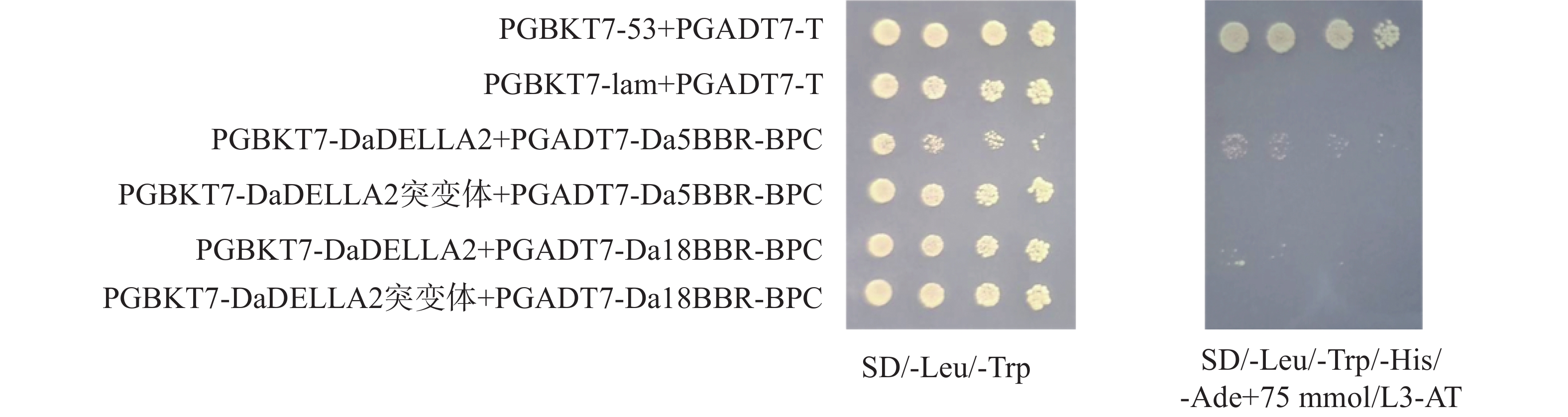
      验证获得阳性菌液后,将OD600 调至0.2后稀释10、102、103倍,分别取实验组一以及相关对照组菌液3.5 μL点于SD/-Leu/-Trp、SD/-Leu/-Trp/-His/-Ade + 75 mmol·L−1 3-AT、SD/-Leu/-Trp/-His/-Ade、固体板上。取实验组二和对照组菌液3.5 μL点于SD/-Leu/-Trp、SD/-Leu/-Trp/-His/-Ade + 75 mmol·L−1 3-AT 固体培养基上,倒置于30 ℃恒温培养箱培养 3~5 d。

    • 通过HMMsearch和BLAST分析以及Phytozome v13网站上下载拟南芥等模式植物BBR-BPC的表达序列,进行分析去除重复序列后在参薯基因组中鉴定了6个BBR-BPC家族成员,并分别命名为 Da4BBR-BPC1、Da4BBR-BPC2、Da5BBR-BPC、Da11BBR-BPCDa14BBR-BPC和Da18BBR-BPC,它们的基因长度范围为 801~1 110 bp,氨基酸长度为267~370 aa(表1)。

      基因编号
      Gene ID
      基因名称
      Gene name
      基因长度/bp
      Gene length
      氨基酸数/aa
      Number of amino acids
      Dioal.04G123900.1Da4BBR-BPC11 110370
      Dioal.04G156300.1Da4BBR-BPC2822274
      Dioal.05G205200.1Da5BBR-BPC801267
      Dioal.11G001300.1Da11BBR-BPC954318
      Dioal.14G132600.1Da14BBR-BPC1 005335
      Dioal.18G083600.1Da18BBR-BPC816272

      Table 1.  Structural information of the DaBBR-BPC gene

      使用 CD-Search搜索DaBBR-BPC 基因的保守结构域,并对DaBBR-BPC基因家族进行进化关系的分析。结果显示,6个 DaBBR-BPC基因均含有共同的保守结构GAGA_bind(PF07859)。不同 DaBBR-BPC 转录因子的蛋白序列和理化性质存在较大差异(表2),结果显示,DaBBR-BPC基因家族分子质量为29 907.27~41 683.46 kDa; 该家族蛋白理论等电点介于9.39~9.84,具有典型碱性特征;亲水性分析显示平均系数均为负值,表明其亲水特性;不稳定指数(Ⅱ)均高于40,提示为不稳定蛋白;脂肪系数在57.43~68.24。

      基因名称
      Gene name
      分子质量/kDa
      Molecular
      Weight
      等电点
      Theoretical pI
      亲水性平均系数
      Grand average of
      hydropathicity
      不稳定指数
      Instability
      index
      脂肪系数
      Aliphatic index
      Da4BBR-BPC141683.469.49−0.79852.9263.62
      Da4BBR-BPC230292.579.82−0.72043.1760.15
      Da5BBR-BPC29907.279.77−0.72350.4361.76
      Da11BBR-BPC35429.329.39−0.69553.2168.24
      Da14BBR-BPC37730.969.62−0.85141.3558.93
      Da18BBR-BPC30231.769.84−0.66949.6157.43

      Table 2.  Analysis of physicochemical properties of DaBBR-BPC gene

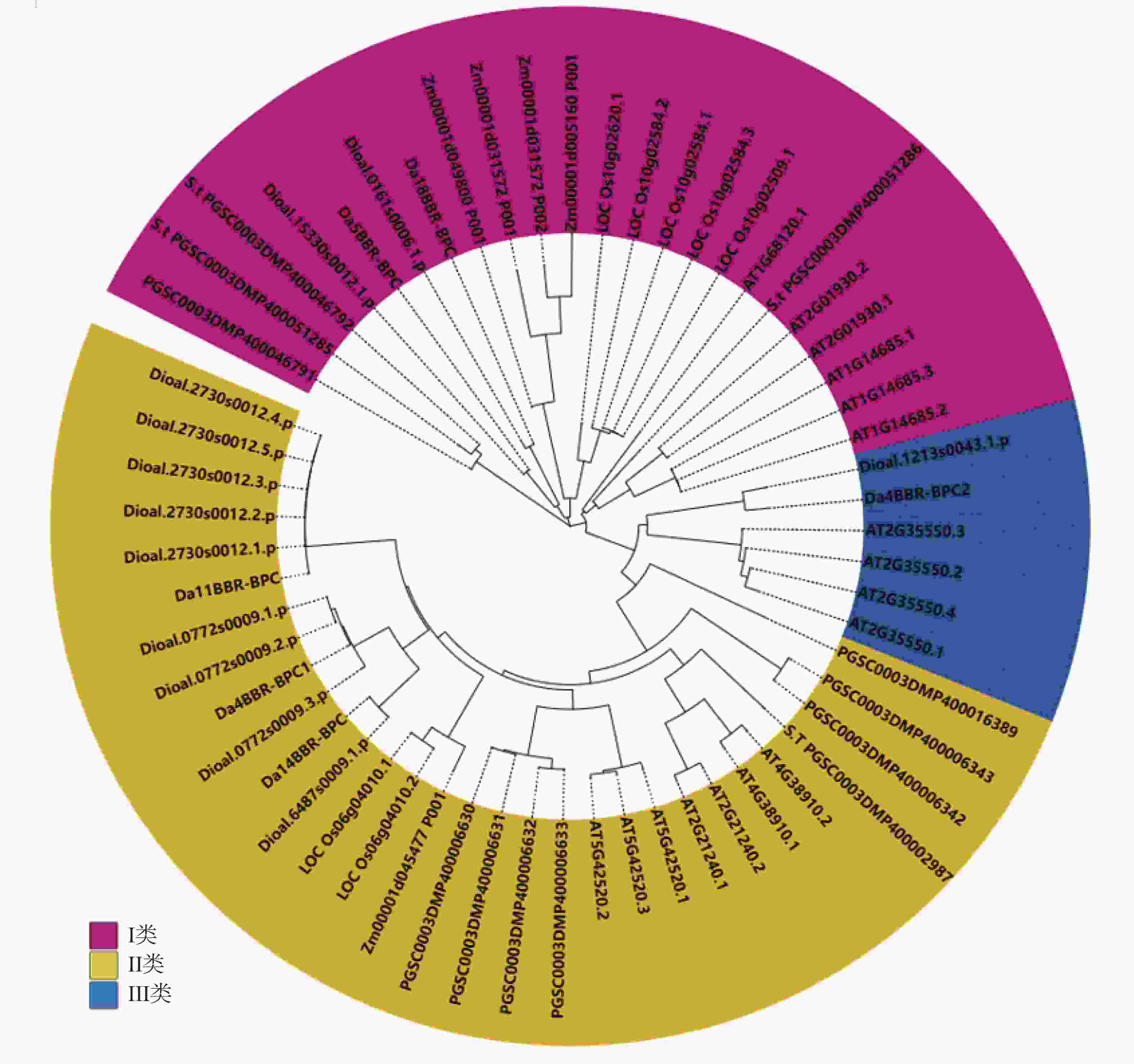
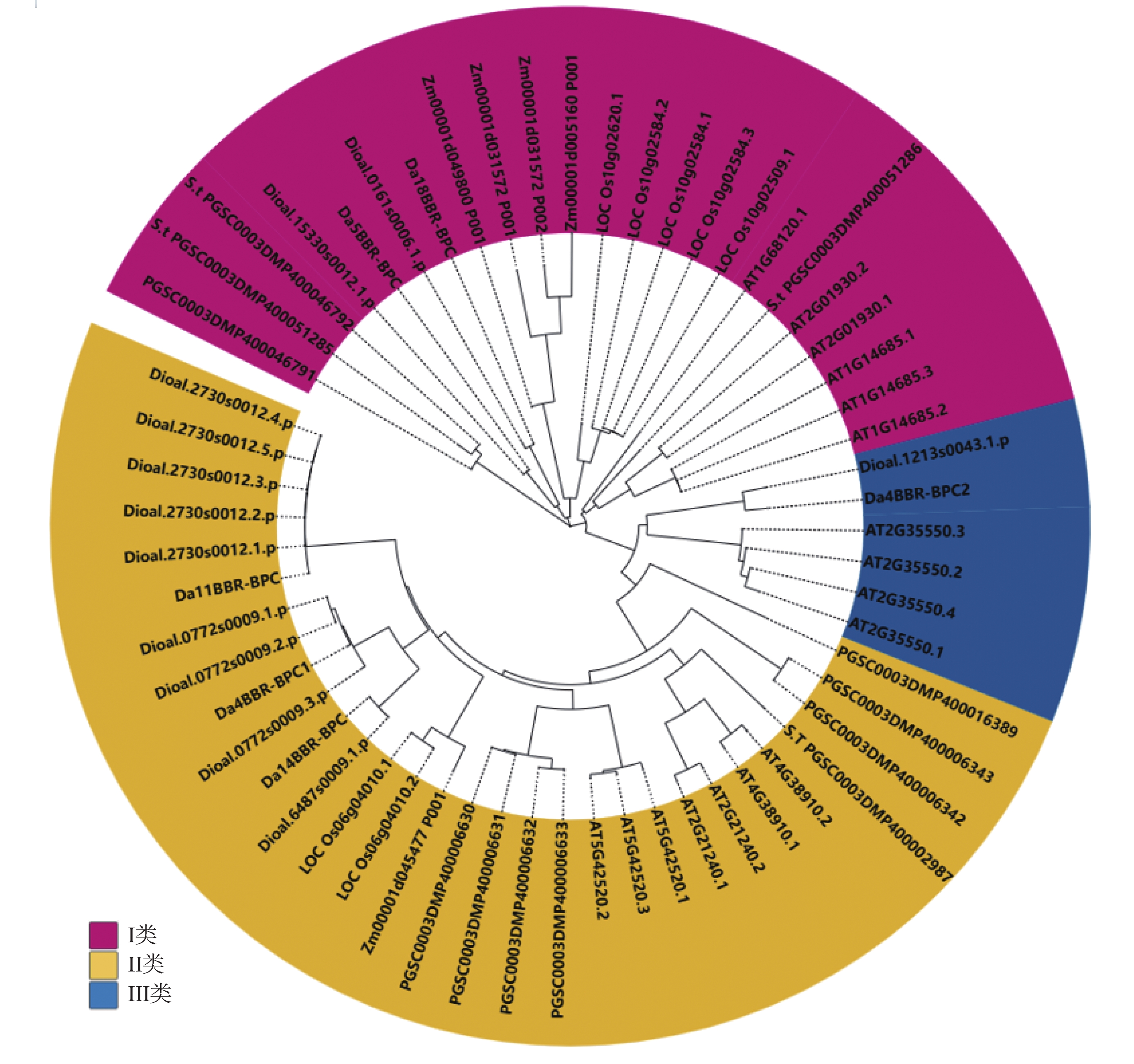
      根据Phytozome v13网站下载的参薯、拟南芥和马铃薯等植物的蛋白序列,用 MEGA7进行多序列比对,并构建相关系统进化树。从图1可知,在拟南芥中,有7个广泛表达的成员(BPC1-7),拟南芥基因组序列编码的 7 个 BPC 分为3类,即Ⅰ类 (BPC1~3)、Ⅱ 类 (BPC4~6)和Ⅲ类 (BPC7)。除了被认为是假基因的BPC5外,它们都是普遍表达的转录激活因子和抑制因子[15, 19]。根据拟南芥BPC基因的家族分类,把参薯BBR-BPC亚家族也分为3类,Da5BBR-BPCDa18BBR-BPC为Ⅰ类,Da4BBR-BPC1Da11BBR-BPCDa14BBR-BPC为Ⅱ类,Da4BBR-BPC2为Ⅲ类。

      Figure 1.  Phylogenetic tree analysis of BBR-BPC gene family

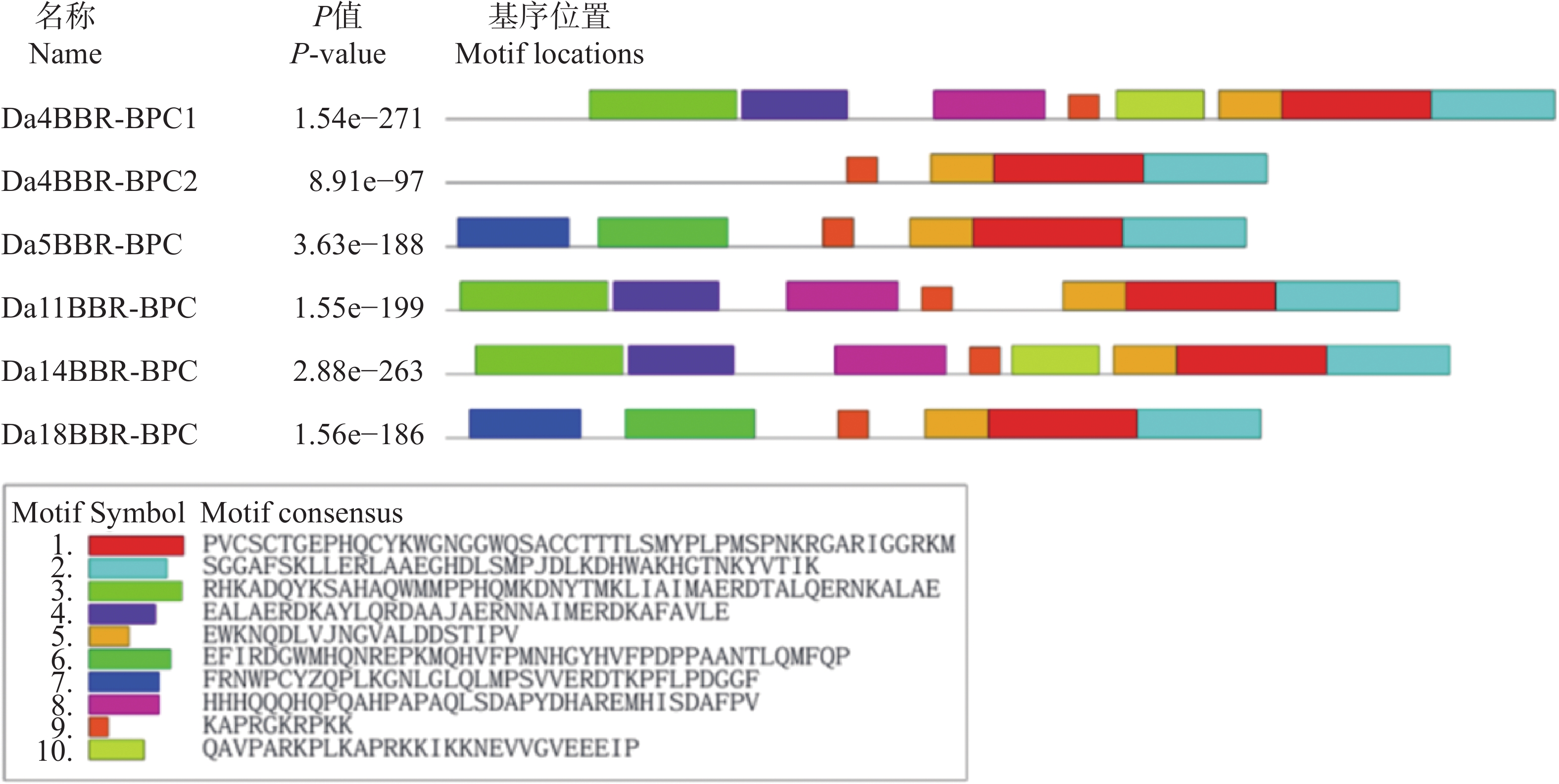
    • 基于MEME Suite对参薯BBR-BPC进行保守基序解析(图2)。结果显示,核心基序(motif1/2/5/9)在6个家族成员中呈现完全保守性。
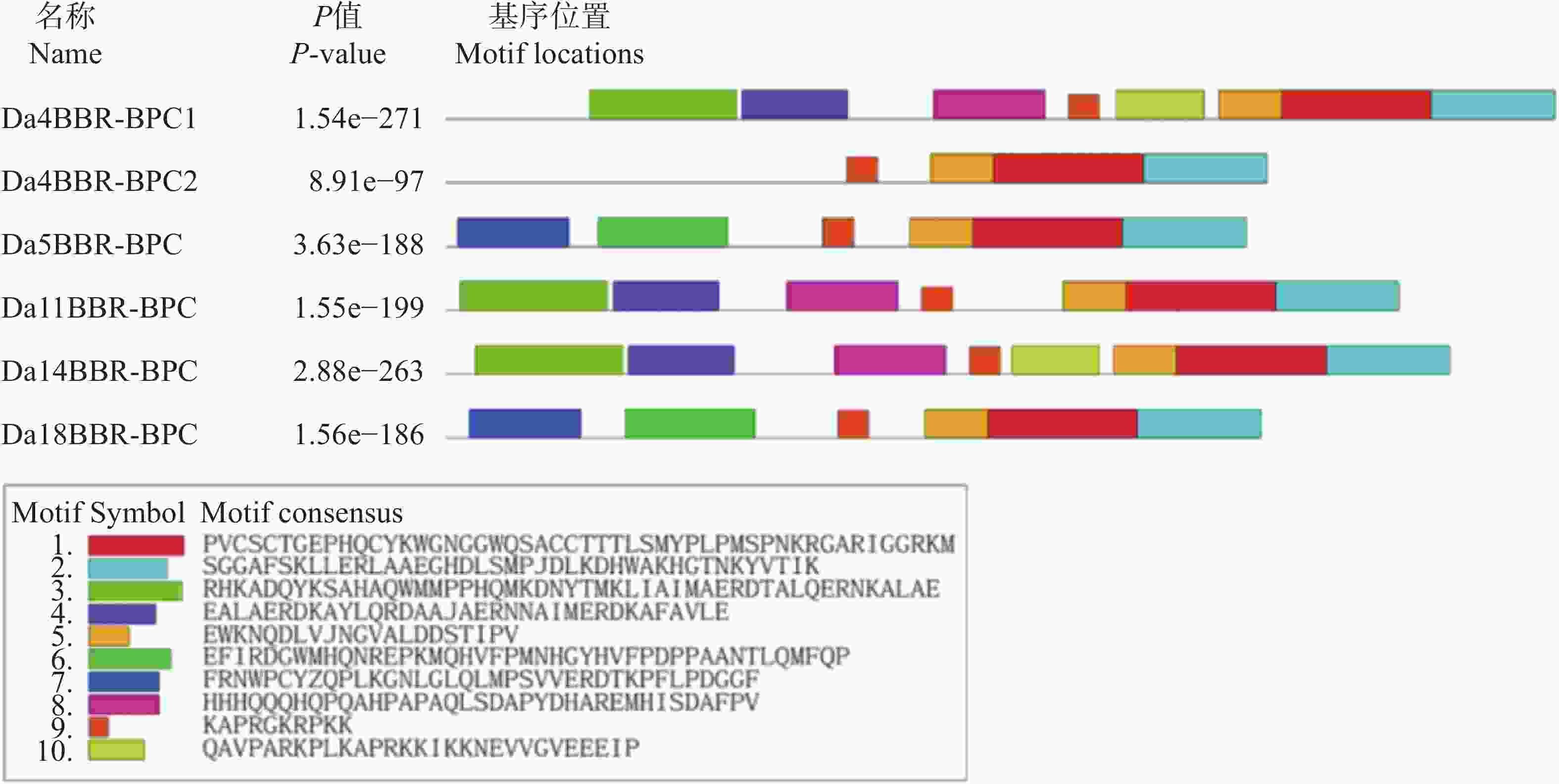
      Figure 2.  Distribution of conserved motifs on Dioscorea alata BBR-BPC protei

    • 结果显示(表3),Da4BBR-BPC1、Da4BBR-BPC2、Da5BBR-BPC、Da11BBR-BPC、Da14BBR-BPC、Da18BBR-BPC在细胞核中都有分布;Da11BBR-BPC、Da14BBR-BPC在细胞质中有分布,Da4BBR-BPC1、Da11BBR-BPC和Da18BBR-BPC在叶绿体中有分布;Da4BBR-BPC1、Da11BBR-BPC、Da14BBR-BPC和Da18BBR-BPC在线粒体中有分布;Da4BBR-BPC2分布在细胞核中,在细胞质、叶绿体和线粒体中均没有分布;Da11BBR-BPC在细胞核、细胞质、叶绿体和线粒体中均有分布。

      基因名称
      Gene name
      细胞核
      Nucleus
      细胞质
      Cytoplasm
      叶绿体
      Chloroplast
      线粒体
      Mitochondria
      Da4BBR-BPC18.0041
      Da4BBR-BPC214.0000
      Da5BBR-BPC14.0000
      Da11BBR-BPC7.5411
      Da14BBR-BPC8.0203
      Da18BBR-BPC11.0011

      Table 3.  Subcellular localization prediction of DaBBR-BPC

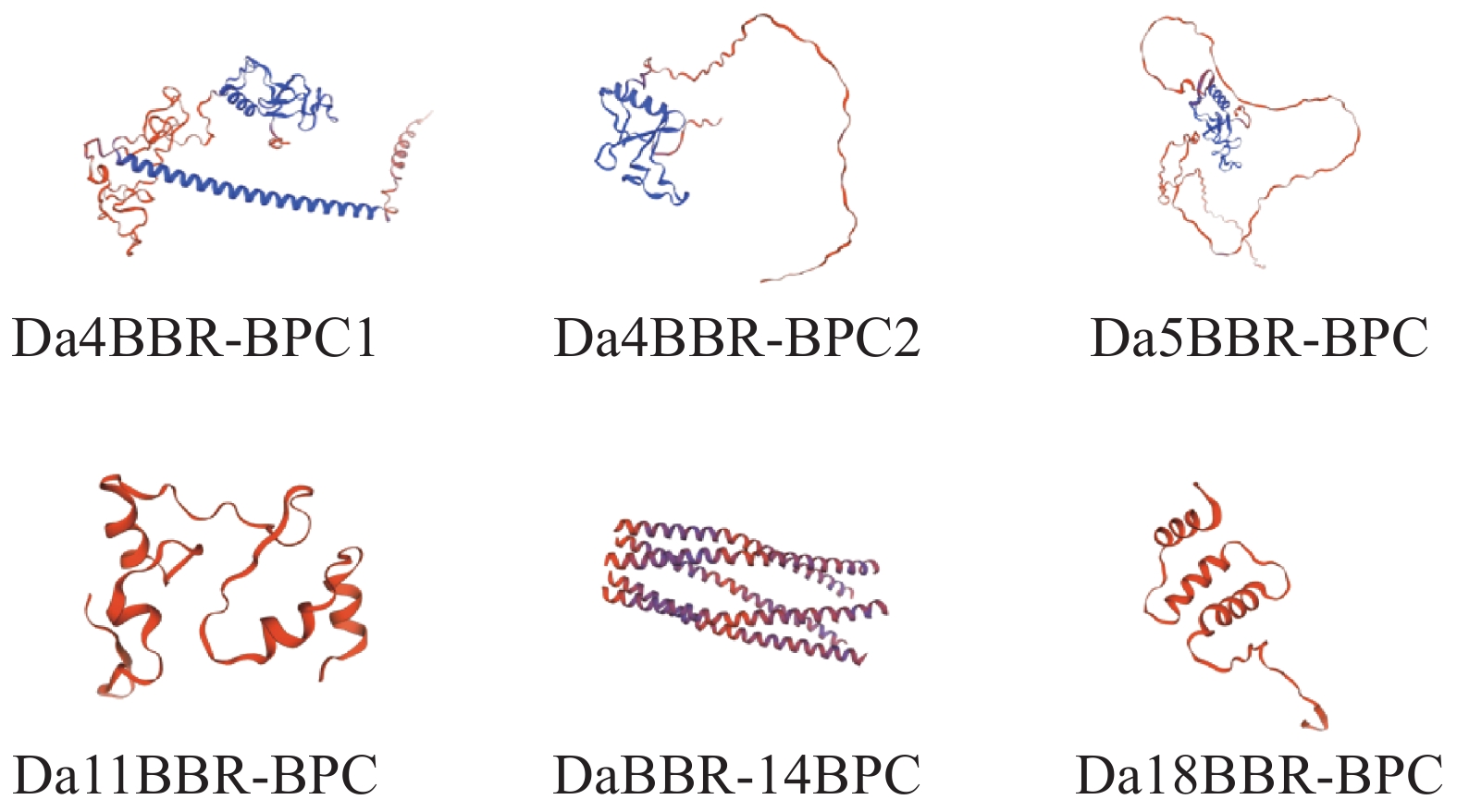
    • 通过生物信息学分析平台SOMPA和SWISS-MODEL对DaBBR-BPC蛋白进行结构预测。二级结构解析表明(表4),无规则卷曲(30.45%~68.54%)和α−螺旋(21.32%~64.18%)构成主要结构元件,两者合计占比超过88%,而延伸链(2.69%~7.72%)和β−转角(2.69%~4.04%)比例较低,未见β−折叠结构。三级结构建模显示(图3),6个家族成员具有高度保守的空间构象。

      名称
      Name
      α−螺旋/%
      Alpha helix
      β−折叠
      Beta sheet
      β−转角/%
      Beta turn
      无规则卷曲/%
      Random coil
      延伸链/%
      Extended strand
      Da4BBR-BPC157.0303.2434.864.86
      Da4BBR-BPC229.203.6560.226.93
      Da5BBR-BPC21.7203.0068.546.74
      Da11BBR-BPC53.1403.4638.684.72
      Da14BBR-BPC64.1802.6930.452.69
      Da18BBR-BPC21.3204.0466.917.72

      Table 4.  Secondary structure analysis of DaBBR-BPC protein
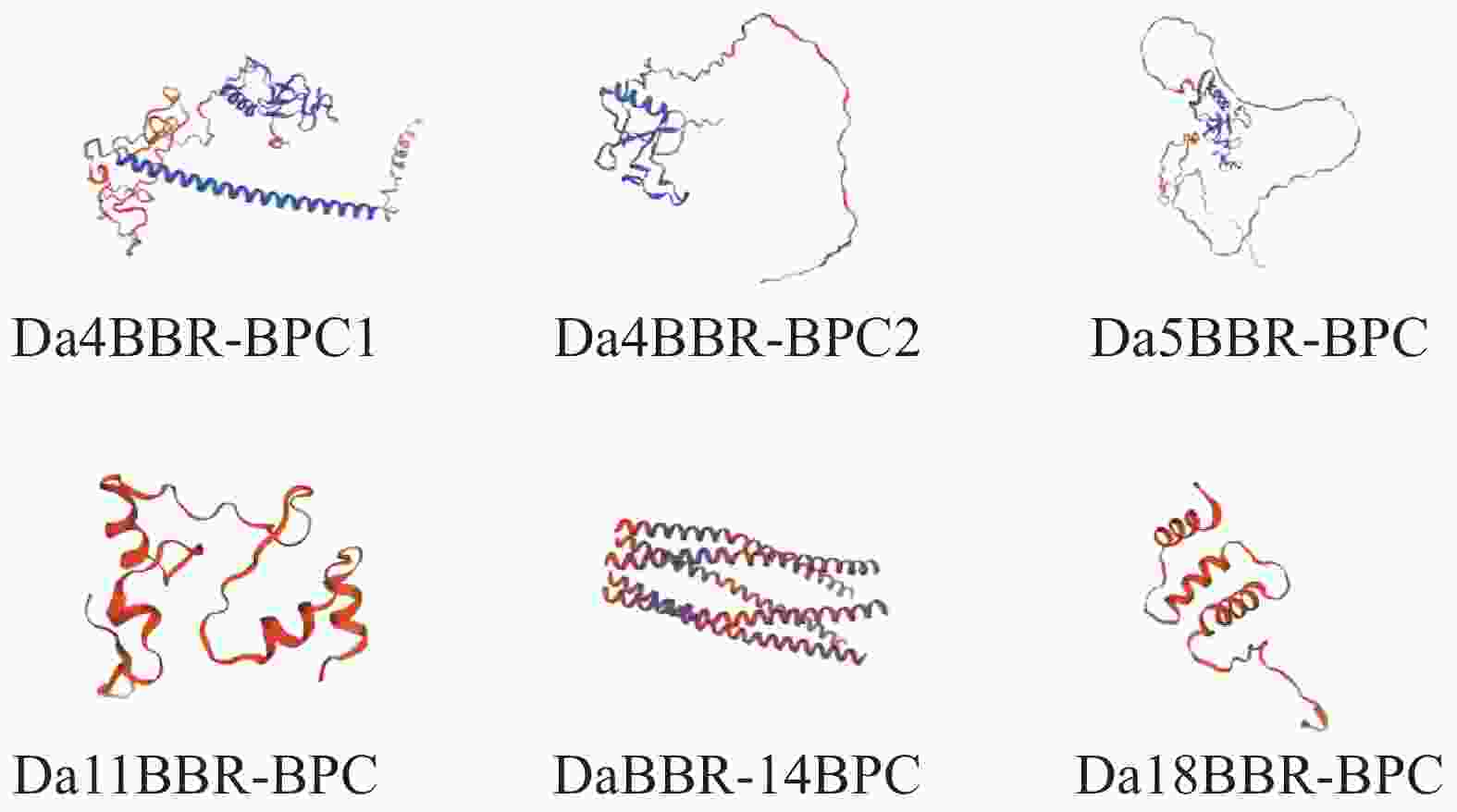
      Figure 3.  Prediction of tertiary structure of DaBBR-BPC protein

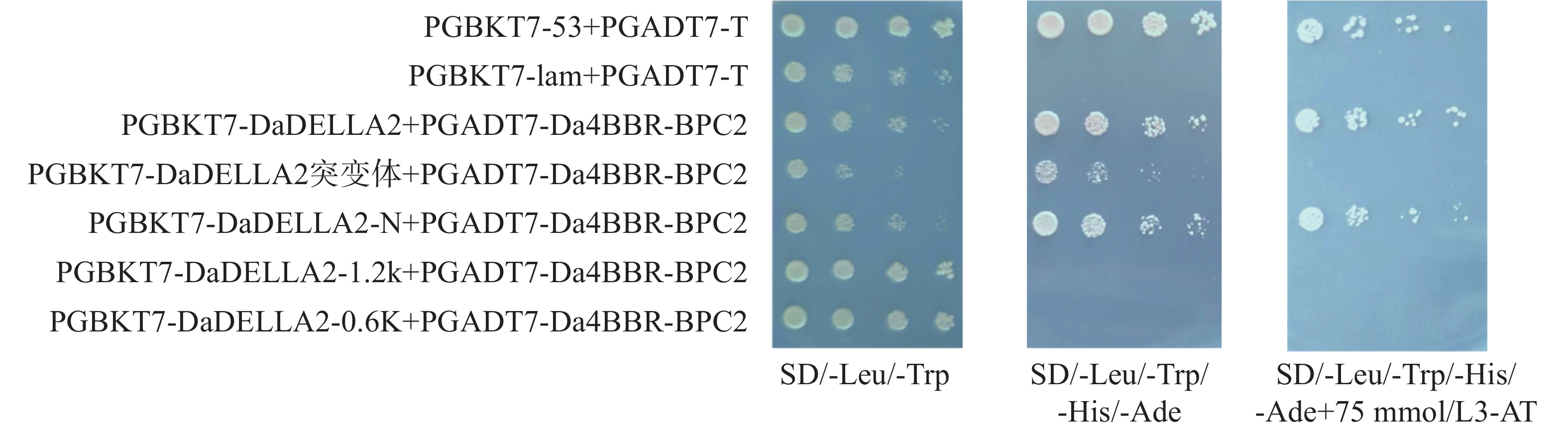
    • 基于实验室前期建立的75 mmol·L−1 3-AT浓度下抑制参薯 DELLA2 蛋白自激活体系,将对照组和实验组分别转入酵母感受态AH109,验证阳性菌液后将OD600 调至0.2,采用梯度稀释点板法,稀释后点板。结果显示(图4),PGBKT7-DaDELLA2/DaDELLA2-N+PGADT7-Da4BBR-BPC2转化后的酵母菌能在 75 mmol·L−1 3-AT的四缺板上长出。结果表明,DaDELLA2 与 Da4BBR-BPC2存在互作,且互作位置发生在DaDELLA2蛋白的 N端。同理将对照组和实验组二转入酵母感受态AH109;验证阳性菌液后调节OD600 至0.2,并分别稀释后点于相应的固体板上。酵母菌生长结果显示(图5),PGADT7-Da5BBR-BPC、PGADT7-Da18BBR-BPC与DaDELLA2也存在互作。
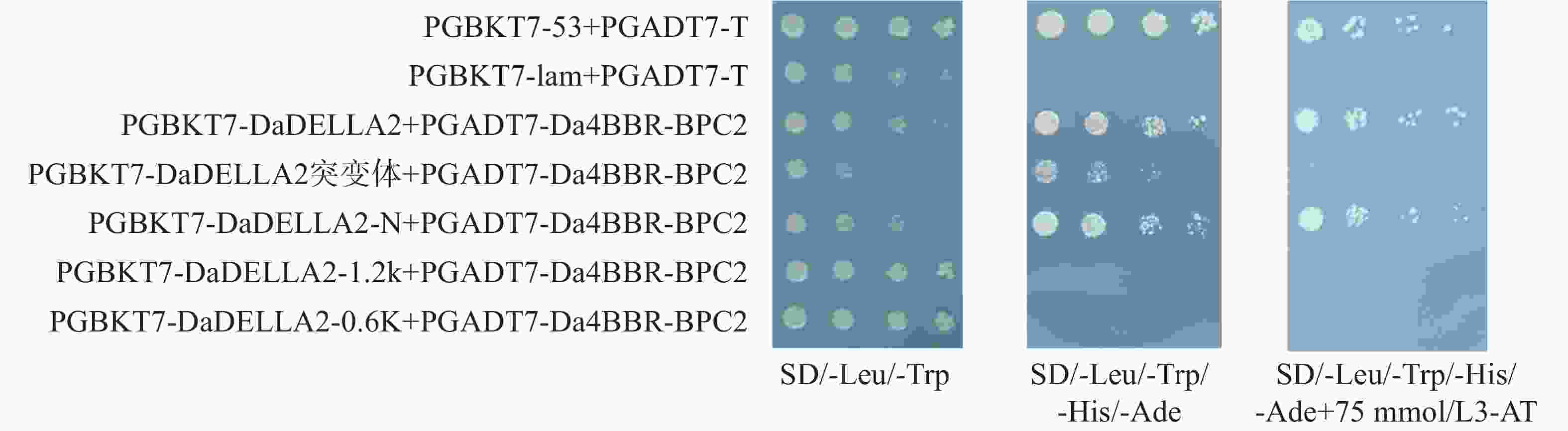
      Figure 4.  Detection of DaDELLA2 and Da4BBR-BPC2 protein interaction
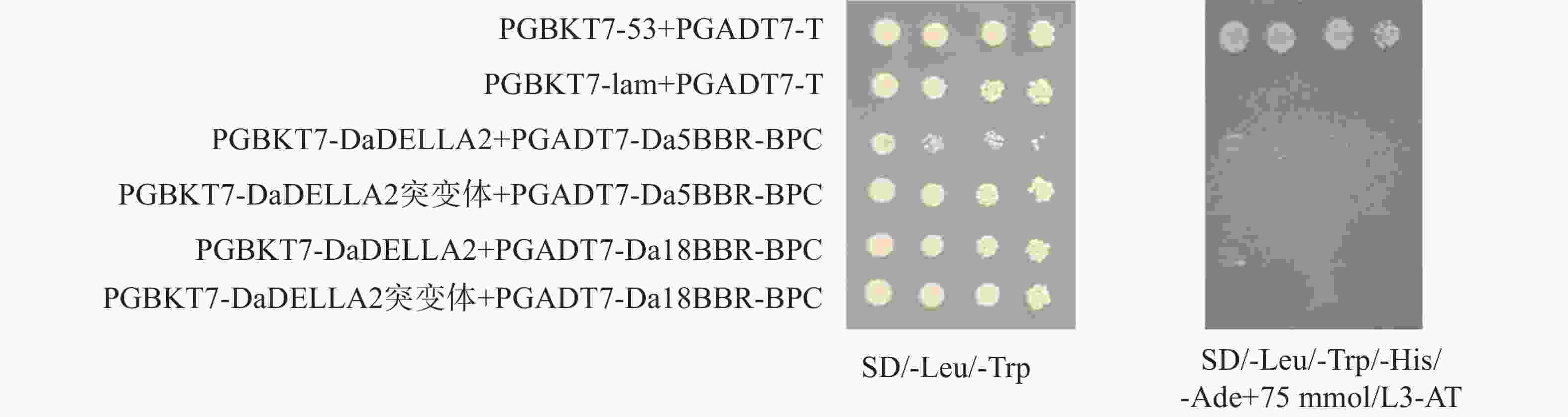
      Figure 5.  Detection of DaDELLA2 and Da5BBR-BPC、Da18BBR-BPC protein interaction

    • 碱性五半胱氨酸(BPC)转录因子的植物特异性家族参与植物发育各个方面,包括胚胎发育、根生长和开花[15, 20]。大麦(Hordeum vulgare)B重组/碱性五半胱氨酸 (BBR-BPC)蛋白家族是与 GAGA 基序结合的最小转录因子之一[23-24]。黑腹果蝇(Drosophila melanogaster)GAGA 因子(dGAF)与这2种类型的 Chromatin-associated proteins(CAP) 相互作用以调节同源框基因[25]CsGAox 基因启动子的候选转录因子 BBR/BPC和 GRAS(赤霉酸不敏感区)[26]。研究发现,BBR-BPC的基因在植物中基因组数量较少,在单子叶参薯、水稻等作物中存在6~8个BBR-BPC基因,有的作物甚至更少[27]

      BBR-BPC可能是调控草地早熟禾(Poa pratensis)根茎发育的关键转录因子[27]BBR-BPC是NAC(NAM、ATAF1/2和CUC2)的潜在TFs,在干旱胁迫条件下,参与百香果(Passiflora edulis)的调控[28]。BBR/BPC TF 家族的标志是存在1个具有 5 个半胱氨酸残基的保守 C 端区域[27]。BBR-BPC是预测的RNAi(DCL、AGO和RDR)相关基因的关键转录调节因子, 小麦(Triticum aestivumRNAi 基因对干旱和高温胁迫有显著反应[29]。BPCs可以通过结合GA基序来调节靶基因的表达,表明BPC s的表达模式可能影响其时空调控[22]。在椰子(Cocos nucifera)中,同一类CnBPC s的表达模式也非常相似,从而确保了它们的功能角色重叠[22],研究表明,BPC基因具有功能冗余性[15]。本研究分析参薯的BBR-BPC家族,结果发现6个DaBBR-BPC基因,它们均含有共同的保守结构域GAGA_bind(PF07859),且不同 DaBBR-BPC 转录因子的蛋白序列和理化性质存在差异,但均属于碱性、亲水性,属不稳定蛋白。Da4BBR-BPC2只分布在细胞核中,Da11BBR-BPC在细胞核、细胞质、叶绿体和线粒体中均有分布。

      参薯营养价值丰富、色泽鲜艳、口感俱佳,是人们喜爱的一种食品[30]。赤霉素(Gibberellin,GA)在块茎发育过程中的作用被广泛研究,赤霉素的应用促进了匍匐茎的伸长并抑制了块茎的形成[31]。同时,植物赤霉素信号传导途径中的负调控蛋白为DELLA蛋白[32]。在赤霉素信号转导通路中,DELLA蛋白作为植物特异性调控因子展现出双重核心功能:其一通过动态负反馈调节机制,直接作用于赤霉素生物合成关键酶编码基因及其受体基因的转录活性,从而精准维持胞内赤霉素稳态;其二通过激活E2/E3泛素连接酶复合体及相关转录调控因子的生物合成,有效增强泛素–蛋白酶体降解级联反应中的负调控元件活性[33]。通过酵母实验发现,DaDELLA2 与 Da4BBR-BPC2、Da5BBR-BPC和Da18BBR-BPC存在互作关系,且在与Da4BBR-BPC2酵母实验结果中发现,Da4BBR-BPC2发生在DaDELLA的 N端,表明参薯中的BBR-BPC基因对DELLA2起到调控作用。BPCs与其他转录因子和染色质重塑蛋白的相互作用进一步复杂化了其调控机制[34-35]。所以,BBR-BPC 家族和赤霉素在参薯生长调控和结薯过程中有着重要的作用,研究它们之间的关系有利于更好地调控参薯的生殖生长,从而产生更高的经济效益。

Reference (35)

Catalog

    /

    DownLoad:  Full-Size Img  PowerPoint
    Return
    Return