


Message Board

Respected readers, authors and reviewers, you can add comments to this page on any questions about the contribution, review, editing and publication of this journal. We will give you an answer as soon as possible. Thank you for your support!

Name
E-mail
Phone
Title
Content
Verification Code
Volume 17 Issue 4
Jul.  2026
Turn off MathJax
Article Contents

Zhao Chenyang, Qiu Xinyao, Li Fen, Wu Shaoying. Resistance monitoring and voltage-gated sodium channel mutation analysis of Myzus persicae against pyrethroids in Hainan[J]. Journal of Tropical Biology, 2026, 17(4): 645-655. doi: 10.15886/j.cnki.rdswxb.20250042
Citation: Zhao Chenyang, Qiu Xinyao, Li Fen, Wu Shaoying. Resistance monitoring and voltage-gated sodium channel mutation analysis of Myzus persicae against pyrethroids in Hainan[J]. Journal of Tropical Biology, 2026, 17(4): 645-655. doi: 10.15886/j.cnki.rdswxb.20250042

Resistance monitoring and voltage-gated sodium channel mutation analysis of Myzus persicae against pyrethroids in Hainan

doi: 10.15886/j.cnki.rdswxb.20250042 cstr: 32425.14.j.cnki.rdswxb.20250042
  • Received Date: 2025-03-03
  • Accepted Date: 2025-05-08
  • Rev Recd Date: 2025-03-07
  • Publish Date: 2026-07-01
  • Myzus persicae is a globally distributed polyphagous pest that can cause severe damage to a variety of economic crops. To assess the resistance levels of field populations of M. persicae to pyrethroid insecticides in Hainan Province, resistance of M. persicae to pyrethroid insecticides was monitored in Haikou, Danzhou, and Sanya from 2021 to 2023. The leaf-dip method was used to determine the sensitivity of M. persicae to lambda-cyhalothrin, deltamethrin, bifenthrin, and permethrin. The results showed that the field populations in all the three regions exhibited the lowest resistance to lambda-cyhalothrin and the highest resistance to bifenthrin, with an overall increasing trend in resistance levels over time. In 2021, the Sanya population showed the lowest resistance to lambda-cyhalothrin, with the LC50 value being 41.992 mg·L−1. The Haikou population exhibited the most significant increase in resistance to bifenthrin, with the resistance ratio rising from 7.35-fold in 2021 to 85.32-fold in 2023, and the LC50 value reaching 2085.829 mg·L−1 in 2023. Analysis of mutations in the sodium ion channel Domain Ⅱ region and the auxiliary subunit TipE revealed that no mutations occurred in the TipE gene in the Haikou, Danzhou, and Sanya populations in 2022. However, mutation of three interlock patterns (I-F, T-F, L-L) was observed at the classical mutation sites 918 and 1014. Among these, the L-L pattern was the most frequent, reaching 70%, 50%, and 50% in the respective populations. The mutation of three interclock patterns showed consistent trends with the resistance levels to different pyrethroid insecticides. These findings reveal the current resistance status and mutation profiles of M. persicae field populations in Hainan, providing important references for the scientific formulation of resistance management strategies and materials for further research into the mechanisms of pyrethroid resistance in M. persicae.
  • [1] Van Emden H F, Eastop V F, Hughes R D, et al. The ecology of Myzus persicae[J]. Annual Review of Entomology, 1969, 14(1): 197−270. https://doi.org/10.1146/annurev.en.14.010169.001213 doi:  10.1146/annurev.en.14.010169.001213
    [2] 何石兰. 海南琼北蔬菜病虫害发生与农药使用调查[J]. 热带农业科学, 2022, 42(12): 98−105. https://doi.org/10.12008/j.issn.1009-2196.2022.12.016 doi:  10.12008/j.issn.1009-2196.2022.12.016
    [3] Fingu-mabola J C, Bawin T, Francis F. Direct and indirect effect via endophytism of entomopathogenic fungi on the fitness of Myzus persicae and its ability to spread PLRV on tobacco[J]. Insects, 2021, 12(2): 89. https://doi.org/10.3390/insects12020089 doi:  10.3390/insects12020089
    [4] Eigenbrode S D, Ding H J, Shiel P, et al. Volatiles from potato plants infected with potato leafroll virus attract and arrest the virus vector, Myzus persicae (Homoptera: Aphididae)[J]. Proceedings of the Royal Society B: Biological Sciences, 2002, 269(1490): 455−460. https://doi.org/10.1098/rspb.2001.1909 doi:  10.1098/rspb.2001.1909
    [5] Gray S, Gildow F E. Luteovirus-aphid interactions[J]. Annual Review of Phytopathology, 2003, 41(1): 539−566. https://doi.org/10.1146/annurev.phyto.41.012203.105815 doi:  10.1146/annurev.phyto.41.012203.105815
    [6] Kanavaki O M, Margaritopoulos J T, Katis N I, et al. Transmission of Potato virus Y in Tobacco plants by Myzus persicae nicotianae and M. persicae s. str.[J]. Plant Disease, 2006, 90(6): 777−782. https://doi.org/10.1094/PD-90-0777 doi:  10.1094/PD-90-0777
    [7] Frantz J D, Gardner J, Hoffmann M P, et al. Greenhouse screening of Capsicum accessions for resistance to green peach aphid (Myzus persicae)[J]. HortScience, 2004, 39(6): 1332−1335. https://doi.org/10.21273/HORTSCI.39.6.1332 doi:  10.21273/HORTSCI.39.6.1332
    [8] 孙瑞红, 姜莉莉, 武海斌, 等. 中国桃蚜防治药剂及抗药性发展[J]. 农药, 2020, 59(1): 1−5. https://doi.org/10.16820/j.cnki.1006-0413.2020.01.001 doi:  10.16820/j.cnki.1006-0413.2020.01.001
    [9] 郁晓梅. 高效氯氟氰菊酯对菜青虫和桃蚜的防治效果及其影响因素研究[D]. 合肥: 安徽农业大学, 2018.
    [10] Bass C, Puinean A M, Zimmer C T, et al. The evolution of insecticide resistance in the peach potato aphid, Myzus persicae[J]. Insect Biochemistry and Molecular Biology, 2014, 51: 41−51. https://doi.org/10.1016/j.ibmb.2014.05.003 doi:  10.1016/j.ibmb.2014.05.003
    [11] Devonshire A L, Foster G N, Sawicki R M. Peach‐potato aphid, Myzus persicae (Sulz.), resistant to organophosphorus and carbamate insecticides on potatoes in Scotland[J]. Plant Pathology, 1977, 26(2): 60−62. https://doi.org/10.1111/j.1365-3059.1977.tb01024.x doi:  10.1111/j.1365-3059.1977.tb01024.x
    [12] Mazzoni E, Cravedi P. Analysis of insecticide‐resistant Myzus persicae (Sulzer) populations collected in Italian peach orchards[J]. Pest Management Science, 2002, 58(9): 975−980. https://doi.org/10.1002/ps.564 doi:  10.1002/ps.564
    [13] Kwon D H, Choi B R, Lee S W, et al. Characterization of carboxylesterase-mediated pirimicarb resistance in Myzus persicae[J]. Pesticide Biochemistry and Physiology, 2009, 93(3): 120−126. https://doi.org/10.1016/j.pestbp.2008.12.001 doi:  10.1016/j.pestbp.2008.12.001
    [14] Fontaine S, Caddoux L, Brazier C, et al. Uncommon associations in target resistance among French populations of Myzus persicae from oilseed rape crops[J]. Pest Management Science, 2011, 67(8): 881−885. https://doi.org/10.1002/ps.2224 doi:  10.1002/ps.2224
    [15] 高希武, 郑炳宗, 曹本钧. 北京及河北廊坊地区桃蚜对拟除虫菊酯类杀虫剂抗性研究[J]. 农药, 1993(2): 8−9. https://doi.org/10.16820/j.cnki.1006-0413.1993.02.003 doi:  10.16820/j.cnki.1006-0413.1993.02.003
    [16] 顾春波, 王刚, 王开运, 等. 我国西南烟区桃蚜 Myzus persicae (Sulzer)的抗药性水平[J]. 植物保护学报, 2006, 33(1): 77−80. https://doi.org/10.3321/j.issn:0577-7518.2006.01.016 doi:  10.3321/j.issn:0577-7518.2006.01.016
    [17] 宫亚军, 王泽华, 石宝才, 等. 北京地区不同桃蚜种群的抗药性研究[J]. 中国农业科学, 2011, 44(21): 4385−4394. https://doi.org/10.3864/j.issn.0578-1752.2011.21.007 doi:  10.3864/j.issn.0578-1752.2011.21.007
    [18] 李艳琼, 赵临宇, 陆星星, 等. 玉溪菜区桃蚜种群对6种常用杀虫剂的抗药性分析[J]. 农学学报, 2015, 5(11): 30−35. https://doi.org/10.11923/j.issn.2095-4050.cjas15020014 doi:  10.11923/j.issn.2095-4050.cjas15020014
    [19] Li Y, Xu Z F, Shi L, et al. Insecticide resistance monitoring and metabolic mechanism study of the green peach aphid, Myzus persicae (Sulzer) (Hemiptera: Aphididae), in Chongqing, China[J]. Pesticide Biochemistry and Physiology, 2016, 132: 21−28. https://doi.org/10.1016/j.pestbp.2015.11.008 doi:  10.1016/j.pestbp.2015.11.008
    [20] Tang Q L, Ma K S, Hou Y M, et al. Monitoring insecticide resistance and diagnostics of resistance mechanisms in the green peach aphid, Myzus persicae (Sulzer) (Hemiptera: Aphididae) in China[J]. Pesticide Biochemistry and Physiology, 2017, 143: 39−47. https://doi.org/10.1016/j.pestbp.2017.09.013 doi:  10.1016/j.pestbp.2017.09.013
    [21] 李文红, 李添群, 杨丽娟, 等. 贵州菜蚜对杀虫剂的敏感性监测[J]. 应用昆虫学报, 2020, 57(4): 868−876. https://doi.org/10.7679/j.issn.2095-1353.2020.089 doi:  10.7679/j.issn.2095-1353.2020.089
    [22] 赵斌荣, 田晓曦, 柴军发, 等. 西蓝花田桃蚜的室内药剂筛选及田间药效评价[J]. 新疆农业科学, 2023, 60(3): 547−554. https://doi.org/10.6048/j.issn.1001-4330.2023.03.004 doi:  10.6048/j.issn.1001-4330.2023.03.004
    [23] Dong K, Du Y Z, Rinkevich F, et al. Molecular biology of insect sodium channels and pyrethroid resistance[J]. Insect Biochemistry and Molecular Biology, 2014, 50: 1−17. https://doi.org/10.1016/j.ibmb.2014.03.012 doi:  10.1016/j.ibmb.2014.03.012
    [24] 王举梅, 李兵, 沈卫德. 菊酯类杀虫剂和昆虫的抗药性关系研究进展[J]. 浙江农业科学, 2010(3): 570−575. https://doi.org/10.3969/j.issn.0528-9017.2010.03.049 doi:  10.3969/j.issn.0528-9017.2010.03.049
    [25] Matsuo T, Itaya N, Mizutani T, et al. 3-Phenoxy-α-cyano-benzyl esters, the most potent synthetic pyrethroids[J]. Agricultural and Biological Chemistry, 1976, 40(1): 247−249. https://doi.org/10.1080/00021369.1976.10862034 doi:  10.1080/00021369.1976.10862034
    [26] Davies T E, O’reilly A O, Field L M, et al. Knockdown resistance to DDT and pyrethroids: from target‐site mutations to molecular modelling[J]. Pest Management Science, 2008, 64(11): 1126−1130. https://doi.org/10.1002/ps.1617 doi:  10.1002/ps.1617
    [27] Silver K S, Song W Z, Nomura Y, et al. Mechanism of action of sodium channel blocker insecticides (SCBIs) on insect sodium channels[J]. Pesticide Biochemistry and Physiology, 2010, 97(2): 87−92. https://doi.org/10.1016/j.pestbp.2009.09.001 doi:  10.1016/j.pestbp.2009.09.001
    [28] Farnham A W, Murray A W A, Sawicki R M, et al. Characterization of the structure‐activity relationship of kdr and two variants of superkdr to pyrethroids in the housefly (Musca domestica L.)[J]. Pesticide Science, 1987, 19(3): 209−220. https://doi.org/10.1002/ps.2780190306 doi:  10.1002/ps.2780190306
    [29] Milani R. Mendelian behavior of resistance to the knock-down action of DDT and correlation between knock-down and mortality in Musca domestica L[J]. Rendiconti-Istituto Superiore di Sanita, 1956, 19(11): 1107−1143.
    [30] Burton M J, Mellor I R, Duce I R, et al. Differential resistance of insect sodium channels with kdr mutations to deltamethrin, permethrin and DDT[J]. Insect Biochemistry and Molecular Biology, 2011, 41(9): 723−732. https://doi.org/10.1016/j.ibmb.2011.05.004 doi:  10.1016/j.ibmb.2011.05.004
    [31] Vais H, Atkinson S, Eldursi N, et al. A single amino acid change makes a rat neuronal sodium channel highly sensitive to pyrethroid insecticides[J]. FEBS Letters, 2000, 470(2): 135−138. https://doi.org/10.1016/S0014-5793(00)01305-3 doi:  10.1016/S0014-5793(00)01305-3
    [32] Ingles P J, Adams P M, Knipple D C, et al. Characterization of voltage-sensitive sodium channel gene coding sequences from insecticide-susceptible and knockdown-resistant house fly strains[J]. Insect Biochemistry and Molecular Biology, 1996, 26(4): 319−326. https://doi.org/10.1016/0965-1748(95)00093-3 doi:  10.1016/0965-1748(95)00093-3
    [33] Williamson M S, Martinez-torres D, Hick C A, et al. Identification of mutations in the housefly para-type sodium channel gene associated with knockdown resistance (kdr) to pyrethroid insecticides[J]. Molecular and General Genetics MGG, 1996, 252: 51−60. https://doi.org/10.1007/BF02173204 doi:  10.1007/BF02173204
    [34] Wang H, Duan W B, Gao R B, et al. Unique post‐translational modifications diversify the sodium channels in peach aphid (Myzus persicae [Sulzer])[J]. Pest Management Science, 2021, 77(10): 4521−4529. https://doi.org/10.1002/ps.6489 doi:  10.1002/ps.6489
    [35] Makita N, Shirai N, Wang D W, et al. Cardiac Na+ channel dysfunction in Brugada syndrome is aggravated by β1-subunit[J]. Circulation, 2000, 101(1): 54−60. https://doi.org/10.1161/01.CIR.101.1.54 doi:  10.1161/01.CIR.101.1.54
    [36] 袁琳琳, 潘雪莲, 陆容材, 等. 海南普通大蓟马对拟除虫菊酯药剂抗性监测及钠通道突变检测[J]. 植物保护, 2023, 49(3): 60−67. https://doi.org/10.16688/j.zwbh.2022062 doi:  10.16688/j.zwbh.2022062
    [37] 陈青, 卢芙萍. 海南豇豆蚜对敌敌畏、三氟氯氰菊酯、辛硫磷和氰戊菊酯的敏感性测定[J]. 中国农学通报, 2009, 25(13): 179−181. https://doi.org/10.11924/j.issn.1000-6850.2009-0418 doi:  10.11924/j.issn.1000-6850.2009-0418
    [38] 汤秋玲, 马康生, 高希武. 蔬菜蚜虫抗药性现状及抗性治理策略[J]. 植物保护, 2016, 42(6): 11−20. https://doi.org/10.3969/j.issn.05291542.2016.06.002 doi:  10.3969/j.issn.05291542.2016.06.002
    [39] Bass C, Nauen R. The molecular mechanisms of insecticide resistance in aphid crop pests[J]. Insect Biochemistry and Molecular Biology, 2023, 156: 103937. https://doi.org/10.1016/j.ibmb.2023.103937 doi:  10.1016/j.ibmb.2023.103937
    [40] Mackenzie T D B, Arju I, Poirier R, et al. A genetic survey of pyrethroid insecticide resistance in aphids in New Brunswick, Canada, with particular emphasis on aphids as vectors of Potato virus Y[J]. Journal of Economic Entomology, 2018, 111(3): 1361−1368. https://doi.org/10.1093/jee/toy035 doi:  10.1093/jee/toy035
    [41] Usherwood P N R, Davies T G E, Mellor I R, et al. Mutations in DIIS5 and the DIIS4–S5 linker of Drosophila melanogaster sodium channel define binding domains for pyrethroids and DDT[J]. FEBS Letters, 2007, 581(28): 5485−5492. https://doi.org/10.1016/j.febslet.2007.10.057 doi:  10.1016/j.febslet.2007.10.057
    [42] Li J, Waterhouse R M, Zdobnov E M. A remarkably stable TipE gene cluster: evolution of insect Para sodium channel auxiliary subunits[J]. BMC Evolutionary Biology, 2011, 11: 337. https://doi.org/10.1186/1471-2148-11-337 doi:  10.1186/1471-2148-11-337
    [43] 林芳菲. 禾谷缢管蚜RSC1阳离子通道基因和钠离子通道辅助亚基基因初步研究[D]. 咸阳: 西北农林科技大学, 2017.
    [44] Mohammed A A, Hatcher P E. Combining entomopathogenic fungi and parasitoids to control the green peach aphid Myzus persicae[J]. Biological Control, 2017, 110: 44−55. https://doi.org/10.1016/j.biocontrol.2017.03.012 doi:  10.1016/j.biocontrol.2017.03.012
    [45] Ateyyat M. Selectivity of four insecticides to woolly apple aphid, Eriosoma lanigerum (Hausmann)and its sole parasitoid, Aphelinus mali (Hald.)[J]. World Applied Sciences Journal, 2012, 16(8): 1060−1064.
    [46] Tamaki G. Spring populations of the green peach aphid on peach trees and the role of natural enemies in their control[J]. Environmental Entomology, 1973, 2(2): 186−191. https://doi.org/10.1093/ee/2.2.186 doi:  10.1093/ee/2.2.186
  • 加载中
通讯作者: 陈斌, bchen63@163.com
  • 1. 

    沈阳化工大学材料科学与工程学院 沈阳 110142

  1. 本站搜索
  2. 百度学术搜索
  3. 万方数据库搜索
  4. CNKI搜索

Figures(1)  / Tables(9)

Article views(70) PDF downloads(9) Cited by()

Proportional views
Related

Resistance monitoring and voltage-gated sodium channel mutation analysis of Myzus persicae against pyrethroids in Hainan

DOI: 10.15886/j.cnki.rdswxb.20250042

Abstract: Myzus persicae is a globally distributed polyphagous pest that can cause severe damage to a variety of economic crops. To assess the resistance levels of field populations of M. persicae to pyrethroid insecticides in Hainan Province, resistance of M. persicae to pyrethroid insecticides was monitored in Haikou, Danzhou, and Sanya from 2021 to 2023. The leaf-dip method was used to determine the sensitivity of M. persicae to lambda-cyhalothrin, deltamethrin, bifenthrin, and permethrin. The results showed that the field populations in all the three regions exhibited the lowest resistance to lambda-cyhalothrin and the highest resistance to bifenthrin, with an overall increasing trend in resistance levels over time. In 2021, the Sanya population showed the lowest resistance to lambda-cyhalothrin, with the LC50 value being 41.992 mg·L−1. The Haikou population exhibited the most significant increase in resistance to bifenthrin, with the resistance ratio rising from 7.35-fold in 2021 to 85.32-fold in 2023, and the LC50 value reaching 2085.829 mg·L−1 in 2023. Analysis of mutations in the sodium ion channel Domain Ⅱ region and the auxiliary subunit TipE revealed that no mutations occurred in the TipE gene in the Haikou, Danzhou, and Sanya populations in 2022. However, mutation of three interlock patterns (I-F, T-F, L-L) was observed at the classical mutation sites 918 and 1014. Among these, the L-L pattern was the most frequent, reaching 70%, 50%, and 50% in the respective populations. The mutation of three interclock patterns showed consistent trends with the resistance levels to different pyrethroid insecticides. These findings reveal the current resistance status and mutation profiles of M. persicae field populations in Hainan, providing important references for the scientific formulation of resistance management strategies and materials for further research into the mechanisms of pyrethroid resistance in M. persicae.

Zhao Chenyang, Qiu Xinyao, Li Fen, Wu Shaoying. Resistance monitoring and voltage-gated sodium channel mutation analysis of Myzus persicae against pyrethroids in Hainan[J]. Journal of Tropical Biology, 2026, 17(4): 645-655. doi: 10.15886/j.cnki.rdswxb.20250042
Citation: Zhao Chenyang, Qiu Xinyao, Li Fen, Wu Shaoying. Resistance monitoring and voltage-gated sodium channel mutation analysis of Myzus persicae against pyrethroids in Hainan[J]. Journal of Tropical Biology, 2026, 17(4): 645-655. doi: 10.15886/j.cnki.rdswxb.20250042
  • 桃蚜(Myzus persicae)是一种全球性分布的多食性害虫,其寄主范围涵盖40科400多种植物,包括多种重要的经济作物,如十字花科、茄科和葫芦科作物[12]。桃蚜可通过刺吸植物汁液直接进行危害,表现为植物叶片卷曲、生长停滞[35]。桃蚜也可通过传播病毒(如黄瓜花叶病毒和马铃薯卷叶病毒)及分泌蜜露等方式间接进行危害[6]。桃蚜分泌的蜜露会诱发煤污病或影响植物光合作用,导致作物品质下降和经济损失[7]。由于桃蚜繁殖速度快、适应能力强,桃蚜已成为农业生产中难以防治的重要害虫之一[8]

    长期以来,化学防治是控制桃蚜的主要手段。然而,随着化学农药的广泛使用,桃蚜对多种药剂的抗性问题日益突出[9]。全球多个国家和地区相继发现桃蚜对有机磷、氨基甲酸酯、拟除虫菊酯及新烟碱类等药剂的抗性种群[10]。苏格兰、意大利、韩国和法国等地的研究表明,桃蚜对拟除虫菊酯类药剂的抗性已广泛存在[1114]。在中国,桃蚜对拟除虫菊酯类药剂抗性问题同样严峻。自1993年,高希武等[15]首次报道北京桃蚜种群对拟除虫菊酯类药剂产生极高抗性以来,桃蚜的抗药性发展迅速。2006年,山东昌乐地区的桃蚜种群对氰戊菊酯表现出中等水平抗性,抗性倍数为23.85倍[16]。2011年,北京6个田间种群均对高效氯氰菊酯产生了高水平抗性[17]。2015年,云南玉溪四个地区的桃蚜种群对溴氰菊酯的抗性倍数最高达到80.22倍[18]。2016年,重庆地区桃蚜种群对氯氟氰菊酯达到了高抗性水平(抗性倍数=41.28)[19],而北京地区桃蚜种群对高效氯氰菊酯的抗性倍数最高达到260.80倍[20]。2020年,贵阳地区的桃蚜种群对联苯菊酯和高效氯氟氰菊酯的LC50值分别为89.93和562.93 mg·L−1,表现出中等抗性水平[21]。2023年,新疆西蓝花田桃蚜对高效氯氟氰菊酯的LC50值为1011.03 mg·L−1,已到达高抗性水平[22]。这些研究揭示桃蚜在中国广泛分布且对多种药剂具有极高抗性的现状。

    抗药性的迅速发展不仅降低了化学防治的效果,还增加了农业生产成本,并对生态环境和公共健康构成潜在威胁。而拟除虫菊酯类药剂的主要作用靶标是电压门控钠离子通道,其通过与钠离子通道结合,延长通道开放时间,导致神经细胞过度兴奋,最终引起昆虫死亡[2324]。含有α−氰基的拟除虫菊酯被归类为Ⅱ型拟除虫菊酯,无α−氰基的则称为Ⅰ型拟除虫菊酯,Ⅱ型拟除虫菊酯表现出更高的神经毒性[2526]。昆虫电压门控钠离子通道(voltage-gate sodium channel,Nav)的结构由四个连续的同源结构域组成,这些片段被称作结构域Ⅰ至Ⅳ(Domain Ⅰ−Ⅳ)。每个结构域包含6个α−螺旋跨膜片段,依次为S1~S6,这些螺旋通过不规则环状多肽链(Linker)相互连接,形成一个完整的通道蛋白[23]。在昆虫中还鉴定出与钠通道相关的跨膜蛋白TipE,该蛋白因能增强昆虫钠通道的功能性表达而被确认为昆虫钠通道的辅助亚基[27]

    钠通道的突变可导致昆虫对菊酯类药剂的敏感性降低,尤其是L1014F和M918T等突变显著降低了拟除虫菊酯与钠离子通道的结合能力,从而导致抗药性的产生,L1014F和M918T突变位于钠通道Domain Ⅱ[28]。最早在家蝇中报道了L1014F突变位点,它是由单核苷酸多态性导致1014位置点的亮氨酸被苯丙氨酸取代[23]。而后研究中发现多个物种1014位点还可被替换为W、C、H和S,这些突变均能显著降低钠通道对菊酯药剂的敏感性[2930]。类似的突变点还有M918(T/L/V),突变M918T会很大程度上影响钠离子通道与氯菊酯和溴氰菊酯结合的能力[31]。M918T突变与L1014F突变的组合(M918T+L1014F)可进一步加剧抗性水平,形成“超级击倒抗性”(super-kdr)表型[3233]。Wang等[34]在2021年克隆桃蚜钠通道时发现918和1014位置存在三种突变连锁形式“I-F、T-F、L-L”,但并未阐明这种突变发生的普遍性及发生频率,也未探究连锁形式与桃蚜抗药性之间的联系。昆虫钠通道辅助亚基TipE暂未报道突变点,但哺乳动物中辅助亚基突变能够引起心律失常、Brugada综合征和心脑血管等多种疾病[35],据此推测昆虫辅助亚基突变可能对昆虫的生长发育、繁殖等产生显著影响。

    本研究通过对海南桃蚜的抗药性监测、super-kdr突变频率及辅助亚基突变位点检测,评估海南桃蚜种群对常用药剂的敏感性变化,揭示桃蚜钠通道关键氨基酸位点突变情况,为科学合理地使用药剂提供依据,同时为开发新型药剂及对桃蚜的综合治理和农业的可持续发展提供参考。

    • 桃蚜室内种群是由中国热带农业科学院环境与植物保护研究所陈青研究员于2021年馈赠,饲养使用新鲜、未接触任何药剂的包菜叶片。室内饲养条件:温度(25 ± 2) ℃,相对湿度66%~80%,光周期L:D=16 h:8 h。桃蚜田间种群采集自2021—2023年海口市、儋州市和三亚市,具体位置见表1。饲养条件与室内种群一致,饲养一代后进行毒力测定。

      种群
      Population
      采集地点
      Collection site
      年份
      Year
      经纬度
      Longitude and latitude
      寄主
      Host plants
      海口种群
      Haikou population
      海南省海口市琼山区石门村
      Shimen Village, Qiongshan District,
      Haikou City, Hainan Province
      2021 19°45′33.95″ N
      110°31′36.98″ E
      白菜、烟草、萝卜
      Chinese cabbage,
      tobacco, radish
      2022 19°45′34.40″ N
      110°31′33.95″ E
      2023 19°45′34.18″ N
      110°31′37.51″ E
      儋州种群
      Danzhou population

      海南省儋州市宝岛新村
      Baodao New Village, Danzhou City,
      Hainan Province
      2021 19°30′21.41″ N
      109°29′38.85″ E
      萝卜、白菜、辣椒
      Radish, cabbage, pepper
      2022 19°30′20.64″ N
      109°29′47.07″ E
      2023 19°30′18.21″ N
      109°29′21.46″ E
      三亚种群
      Sanya population
      海南省三亚市崖州区坝头基地
      Batou Base, Yazhou District,
      Sanya City, Hainan Province
      2021 18°23′13.75″ N
      109°08′38.00″ E
      茄子、白菜、萝卜
      Eggplant, cabbage, radish
      2022 18°23′8.71″ N
      109°08′31.08″ E
      2023 18°23′6.94″ N
      109°08′34.71″ E

      Table 1.  Information of field population collection of Myzus persicae

    • 桃蚜毒力测定使用叶片药膜法:使用打孔器将洗净的白菜叶打出4 cm圆形叶片,放置到一次性塑料杯(盖子具有通气孔)中,倒入30 mL药液使叶片和塑料杯浸泡15 s,随后倒回药液晾干2 h。用毛笔小心将桃蚜转移至准备好的塑料杯中,最后在盖口放上20目(孔径为0.127 mm)防虫网后盖上盖子。所用桃蚜选择由无翅雌蚜产出的4~6 d若蚜和7~11 d无翅成蚜进行实验。所用药剂为95%氯菊酯(上海克林生物科技有限公司);98%联苯菊酯(北京华诺远生物科技有限公司);98%溴氰菊酯(北京华诺远生物科技有限公司);97%高效氯氟氰菊酯(上海毕得医药科技股份有限公司)。所用药液使用0.1% Triton X-100溶液等比稀释6~8个浓度,每个浓度设置3组重复,每个重复放置30头桃蚜,在温度25 ℃、相对湿度70%、光周期16 L:8 D条件下48 h后检查成蚜死亡情况,使用毛刷轻触桃蚜,无反应判定为死亡。根据统计后的总虫数和死亡数,采用PoloPlus软件进行方差分析和回归分析,得出LC50、95%置信区间,斜率、自由度、卡方等。

    • 根据NCBI(https://www.ncbi.nlm.nih.gov/)已上传的桃蚜钠离子通道α亚基(Genbank登录号:MN124170)和TipE(Genbank登录号:MN176135)序列,利用SnapGene软件设计PCR引物,引物设计区域在外显子上,克隆引物信息见表2。引物由擎科生物科技股份有限公司合成。

      引物名称
      Primer
      引物序列
      Primer sequence
      扩增长度/bp
      Amplification
      length
      Domain Ⅱ-5' GTATTCGATCCGTTCG
      TC
      1942
      Domain Ⅱ-3' CAATCTTTTCTTGGCGTT
      GTTGCTG
      MpTipE-1-5' ATGGATGACGACGGGCC
      GGC
      1285
      MpTipE-1-3' CGGTGGAATTGGTTAGA
      AACGGTG
      MpTipE-2-5' AAACTTGACCAAGACG
      ATG
      65
      MpTipE-2-3' TTAGACTTCCGCCGTCG
      GCC

      Table 2.  Cloning primer information of Domain Ⅱ and TipE genes of M. persicae

    • 利用TransDirect® Animal Tissue PCR Kit快速提取试剂盒(北京全式金)提取单头桃蚜基因组DNA。取单头无翅桃蚜成虫放入1.5 mL离心管进行液氮冷冻处理,加入12.0 μL的AD1 Buffer和3.0 μL的AD2 Buffer,使用研磨棒进行充分研磨。室温静置10 min后95 ℃孵育3 min。再加入12.0 μL的AD3 Buffer充分混匀,放入−20 ℃冰箱保存。

    • 使用2×Phanta® Flash Master Mix(Dye Plus)(南京诺唯赞)试剂盒进行PCR扩增,反应体系为9.5 μL ddH2O,12.5 μL 2×Phanta Flash Master Mix,1.0 μL上游引物,1.0 μL下游引物,1.0 μL DNA模板。PCR反应条件为98 ℃ 1 min;98 ℃ 30 s,60 ℃ 30 s,72 ℃ 2 min,30个循环;72 ℃ 8 min。PCR产物经1%琼脂糖凝胶电泳验证,条带正确后由擎科生物科技股份有限公司测序。

    • 对海南三个地区(海口、儋州和三亚)桃蚜田间种群进行抗药性监测,桃蚜无翅成蚜对四种菊酯药剂的抗性在总体上呈现逐年上升趋势。其中海口种群(表3)对联苯菊酯抗性的增长最为显著,2021—2023年,LC50从179.763 mg·L−1增至2 085.829 mg·L−1,抗性倍数提升11.6倍,尤其在2021—2022年间,抗性倍数从7.35增至38.93,增幅达5.30倍。海口种群对氯菊酯抗性持续上升,LC50从127.432 mg·L−1增至625.119 mg·L−1,抗性倍数提高4.9倍。海口种群对溴氰菊酯抗性增长显著,2021—2023年,LC50从89.154 mg·L−1增至974.511 mg·L−1,抗性倍数提高10.9倍。海口种群对高效氯氟氰菊酯的抗性呈先增后减趋势,LC50最大为123.412 mg·L−1

      药剂
      Pesticide
      种群
      Population
      年份
      Year
      致死中浓度(95%置信区间)
      LC50 (95%CL)/(mg·L−1)
      斜率±标准误
      Slope±SE
      卡方
      χ2
      抗性倍数
      Resistance ratio
      氯菊酯
      Permethrin
      室内 Indoor 2021 7.822(2.007~22.417) 1.098±0.147 10.476 1
      海口 Haikou 2021 127.432(56.522~247.999) 1.091±0.198 0.534 16.29
      2022 258.838(106.348~555.941) 0.828±0.107 1.569 33.10
      2023 625.119(202.346~1693.490 0.708±0.097 7.152 79.92
      联苯菊酯
      Bifenthrin
      室内 Indoor 2021 24.448(13.805~40.478) 1.241±0.184 1.813 1
      海口 Haikou 2021 179.763(88.319~319.883) 1.029±0.146 2.037 7.35
      2022 951.704(217.684~2380.737 1.019±0.173 6.700 38.93
      2023 2085.829(146.485~4822.066 1.210±0.289 4.388 85.32
      溴氰菊酯
      Deltamethrin
      室内 Indoor 2021 15.912(7.801~28.549) 1.067±0.196 2.696 1
      海口 Haikou 2021 89.154(40.740~167.165) 1.159±0.206 1.304 5.60
      2022 278.746(28.689~884.019) 1.002±0.175 6.591 17.52
      2023 974.511(553.058~1590.650 1.137±0.151 1.604 61.24
      高效氯氟氰菊酯
      λ-Cyhalothrin
      室内 Indoor 2021 11.122(3.661~27.029) 1.001±0.166 4.101 1
      海口 Haikou 2021 94.331(40.516~190.235) 0.853±0.118 1.246 8.48
      2022 123.412(59.820~243.210) 0.919±0.119 1.886 11.10
      2023 105.589(26.221~446.355) 1.202±0.185 7.862 9.49

      Table 3.  The resistance level of adult M. persicae to four pyrethroids in Haikou population from 2021 to 2023

      儋州种群(表4)对联苯菊酯的抗性倍数提高了2.27倍,2021—2023年,LC50从109.510 mg·L−1增至297.588 mg·L−1。对溴氰菊酯抗性倍数提高了1.81倍。LC50从175.219 mg·L−1增至317.829 mg·L−1。儋州种群对氯菊酯和高效氯氟氰菊酯的抗性呈先降后升趋势,LC50最大分别为256.581、194.872 mg·L−1

      药剂
      Pesticide
      种群
      Population
      年份
      Year
      致死中浓度(95%置信区间)
      LC50 (95%CL)/(mg·L−1)
      斜率±标准误
      Slope±SE
      卡方
      2
      抗性倍数
      Resistance ratio
      氯菊酯
      Permethrin
      室内 Indoor20217.822(2.007~22.417)1.098±0.14710.4761
      儋州 Danzhou2021188.196(46.009~591.424)0.745±0.1055.53524.10
      2022111.974(18.918~454.805)0.902±0.1373.72014.32
      2023256.581(117.781~510.874)0.824±0.1273.65432.80
      联苯菊酯
      Bifenthrin
      室内 Indoor202124.448(13.805~40.478)1.241±0.1841.8131
      儋州 Danzhou2021109.510(46.376~219.363)0.902±0.1291.6564.47
      2022135.599(58.074~287.994)1.012±0.1560.8845.55
      2023297.588(123.295~615.965)0.724±0.1063.28412.17
      溴氰菊酯
      Deltamethrin
      室内 Indoor202115.912(7.801~28.549)1.067±0.1962.6961
      儋州 Danzhou2021175.219(84.240~360.934)1.156±0.2001.19611.01
      2022303.838(148.752~552.008)1.108±0.2273.40919.09
      2023317.829(171.801~589.112)1.014±0.1312.80019.97
      高效氯氟氰菊酯
      λ-Cyhalothrin
      室内 Indoor202111.122(3.661~27.029)1.001±0.1664.1011
      儋州 Danzhou2021183.401(75.170~406.535)0.865±0.1252.17316.49
      2022107.888(36.465~250.049)1.079±0.1774.0729.70
      2023194.872(73.680~420.456)0.969±0.1450.59817.52

      Table 4.  The resistance level of adult M. persicae to four pyrethroids in Danzhou population from 2021 to 2023

      三亚种群(表5)对联苯菊酯、溴氰菊酯、高效氯氟氰菊酯均呈现逐年增长趋势,其中对高效氯氟氰菊酯增长最为显著,2021—2023年,LC50从41.992 mg·L−1增至334.303 mg·L−1,抗性倍数提高了7.95倍。三亚种群对联苯菊酯抗性倍数提高了2.14倍。LC50从123.168 mg·L−1增至262.661 mg·L−1。对溴氰菊酯抗性倍数提高了1.62倍,LC50从177.431 mg·L−1增至288.418 mg·L−1。三亚种群的对氯菊酯抗性呈先增后减趋势,LC50最大为383.059 mg·L−1

      药剂
      Pesticide
      种群
      Population
      年份
      Year
      致死中浓度(95%置信区间)
      LC50 (95%CL)/(mg·L−1)
      斜率±标准误
      Slope±SE
      卡方
      2
      抗性倍数
      Resistance ratio
      氯菊酯
      Permethrin
      室内 Indoor20217.822(2.007~22.417)1.098±0.14710.4761
      三亚 Sanya2021133.755(64.090~264.672)0.928±0.1192.15217.10
      2022383.059(52.267~922.902)1.379±0.2843.00848.97
      2023324.531(130.239~659.206)0.850±0.1101.87541.49
      联苯菊酯
      Bifenthrin
      室内 Indoor202124.448(13.805~40.478)1.241±0.1841.8131
      三亚 Sanya2021123.168(10.793~143.544)1.000±0.1377.7025.03
      2022126.377(17.959~716.647)1.016±0.1575.0415.17
      2023262.661(124.049~462.697)1.087±0.1801.31310.74
      溴氰菊酯
      Deltamethrin
      室内 Indoor202115.912(7.801~28.549)1.067±0.1962.6961
      三亚 Sanya2021177.431(97.545~321.265)1.150±0.1971.05211.15
      2022189.402(36.724~733.561)1.029±0.1706.05611.90
      2023288.418(141.673~508.109)1.006±0.1511.98818.13
      高效氯氟氰菊酯
      λ-Cyhalothrin
      室内 Indoor202111.122(3.661~27.029)1.001±0.1664.1011
      三亚 Sanya202141.992(19.202~80.753)0.911±0.1472.3753.78
      2022203.921(52.780~422.062)1.100±0.2522.2518.33
      2023334.303(125.812~718.455)0.926±0.1361.26630.06

      Table 5.  The resistance level of adult M. persicae to four pyrethroids in Sanya population from 2021 to 2023

    • 桃蚜若蚜对联苯菊酯和溴氰菊酯抗性变化趋势与成蚜一致。桃蚜若蚜对联苯菊酯和溴氰菊酯的抗性在三个地区均呈现逐年上升趋势,其中海口种群(表6)的抗性增长最为显著,2021—2023年,对联苯菊酯LC50从85.034 mg·L−1增至601.582 mg·L−1,抗性倍数提升7.06倍;对溴氰菊酯LC50从89.154 mg·L−1增至974.511 mg·L−1,抗性倍数提高8.98倍。海口种群对氯菊酯也呈现逐年上升趋势,LC50从2021年的149.731 mg·L−1增至2023年的319.846 mg·L−1,抗性倍数从34.98倍增至74.73倍。海口种群对高效氯氟氰菊酯抗性倍数先增后降,LC50最大为123.412 mg·L−1

      药剂
      Pesticide
      种群
      Population
      年份
      Year
      致死中浓度(95%置信区间)
      LC50 (95%CL)/(mg·L−1)
      斜率±标准误
      Slope±SE
      卡方
      2
      抗性倍数
      Resistance ratio
      氯菊酯
      Permethrin
      室内 Indoor20214.280(1.972~8.828)0.815±0.1190.9931
      海口 Haikou2021149.731(74.075~316.439)1.013±0.1412.10934.98
      2022249.250(54.159~799.854)0.834±0.1154.31558.24
      2023319.846(175.512~540.323)1.060±0.1491.65674.73
      联苯菊酯
      Bifenthrin
      室内 Indoor202118.620(10.100~34.203)0.944±0.1380.9561
      海口 Haikou202185.034(26.021~270.905)0.981±0.1405.1674.57
      2022420.535(219.478~779.872)1.158±0.1810.6622.59
      2023601.582(260.706~1168.7441.089±0.1911.16432.30
      溴氰菊酯
      Deltamethrin
      室内 Indoor202115.912(7.801~28.549)1.067±0.1962.6961
      海口 Haikou202189.154(40.740~167.165)1.159±0.2061.3045.60
      2022278.746(28.689~884.019)1.002±0.1756.59217.52
      2023974.511(553.058~1590.6501.137±0.1511.60461.24
      高效氯氟氰菊酯
      λ-Cyhalothrin
      室内 Indoor202111.122(3.661~27.029)1.001±0.1664.1011
      海口 Haikou202194.331(40.516~190.235)0.853±0.1181.2468.48
      2022123.412(59.820~ 243.210)0.919±0.1191.88611.10
      2023105.589( 26.221~446.355)1.202±0.1857.86229.49

      Table 6.  The resistance levels of M. persicae to four pyrethroids in Haikou population from 2021 to 2023

      儋州种群(表7)对联苯菊酯和溴氰菊酯抗性呈现逐年上升趋势,对联苯菊酯LC50从2021年的69.419 mg·L−1增至2023年的283.593 mg·L−1,抗性倍数从3.73倍增至15.23倍;对溴氰菊酯LC50从2021年的175.219 mg·L−1增至2023年的317.829 mg·L−1,抗性倍数从11.01倍增至19.97倍。儋州种群对氯菊酯和高效氯氟氰菊酯抗性呈现先降后升趋势,LC50最大分别为216.634、194.872 mg·L−1

      药剂
      Pesticide
      种群
      Population
      年份
      Year
      致死中浓度(95%置信区间)
      LC50 (95%CL)/(mg·L−1)
      斜率±标准误
      Slope±SE
      卡方
      2
      抗性倍数
      Resistance ratio
      氯菊酯
      Permethrin
      室内 Indoor 2021 4.280(1.972~8.828) 0.815±0.119 0.993 1
      儋州 Danzhou 2021 93.481(45.992~202.027) 1.013±0.154 2.227 21.84
      2022 87.495(34.752~188.127) 0.717±0.112 3.365 20.44
      2023 216.634(79.123~472.302) 0.655±0.100 4.899 50.62
      联苯菊酯
      Bifenthrin
      室内 Indoor 2021 18.620(10.100~34.203) 0.944±0.138 0.956 1
      儋州 Danzhou 2021 69.419(17.169~193.931) 1.012±0.143 4.957 3.73
      2022 136.214(61.708~251.010) 1.137±0.176 1.558 7.32
      2023 283.593(138.369~538.304) 0.759±0.096 4.985 15.23
      溴氰菊酯
      Deltamethrin
      室内 Indoor 2021 15.912(7.801~28.549) 1.067±0.196 2.696 1
      儋州 Danzhou 2021 175.219(84.240~360.934) 1.156±0.200 1.196 11.01
      2022 303.838(148.752~552.008 ) 1.108±0.227 3.409 19.09
      2023 317.829(171.801~589.112) 1.014±0.131 2.800 19.97
      高效氯氟氰菊酯
      λ-Cyhalothrin
      室内 Indoor 2021 11.122(3.661~27.029) 1.001±0.166 4.101 1
      儋州 Danzhou 2021 183.401(75.170~406.535) 0.865±0.125 2.173 16.49
      2022 107.888(36.465~250.049) 1.079±0.177 4.072 9.70
      2023 194.872(73.680~420.456) 0.969±0.145 0.598 17.52

      Table 7.  The resistance levels of M. persicae to four pyrethroids in Danzhou population from 2021 to 2023

      三亚种群(表8)对联苯菊酯、溴氰菊酯和高效氯氟氰菊酯抗性呈现逐年上升趋势,其中对高效氯氟氰菊酯抗性增长最为显著,LC50从2021年的41.992 mg·L−1增至2023年的334.303 mg·L−1,抗性倍数从3.78倍增至30.06倍。三亚种群对氯菊酯抗性倍数先增后降,LC50最大为321.030 mg·L−1

      药剂
      Pesticide
      种群
      Population
      年份
      Year
      致死中浓度(95%置信区间)
      LC50 (95%CL)/(mg·L−1)
      斜率±标准误
      Slope±SE
      卡方
      2
      抗性倍数
      Resistance ratio
      氯菊酯
      Permethrin
      室内 Indoor20214.280(1.972~8.828)0.815±0.1190.9931
      三亚 Sanya2021107.272(56.402~211.818)0.988±0.1351.32525.06
      2022321.030(154.608~529.959)1.475±0.3061.70275.01
      2023306.762(140.993~546.561)1.004±0.1642.77119.40
      联苯菊酯
      Bifenthrin
      室内 Indoor202118.620(10.100~34.203)0.944±0.1380.9561
      三亚 Sanya202156.959(31.349~99.704)0.993±0.1353.0713.06
      202298.565(33.128~298.703)0.840±0.1164.3715.29
      2023222.271(109.896~420.360)0.942±0.1201.89211.94
      溴氰菊酯
      Deltamethrin
      室内 Indoor202115.912(7.801~28.549)1.067±0.1962.6961
      三亚 Sanya2021177.431(97.545~321.265)1.150±0.1971.05211.15
      2022189.402( 36.724~733.561)1.029±0.1706.05611.90
      2023288.418(141.673~508.109)1.006±0.1511.98818.13
      高效氯氟氰菊酯
      λ-Cyhalothrin
      室内 Indoor202111.122(3.661~27.029)1.001±0.1664.1011
      三亚 Sanya202141.992(19.202 ~80.753)0.911±0.1472.3753.78
      2022203.921(52.780~422.062)1.100±0.2522.2518.33
      2023334.303(125.812~718.455)0.926±0.1361.26630.06

      Table 8.  The resistance levels of M.persicae to four pyrethroids in Sanya population from 2021 to 2023

    • 对2022年海口、儋州和三亚种群的钠离子通道DomainⅡ区域和辅助亚基TipE基因进行克隆,并与室内种群的克隆子序列进行比对。结果显示,三个田间种群在918位点和1014位点存在连锁突变现象,且不同地区种群突变频率存在显著差异。如图1所示,918和1014位点主要表现为“I-F”、“T-F”和“L-L”三种类型。“L-L”连锁突变在三个种群中均占主导地位,海口、儋州和三亚种群的突变频率分别为70%、50%和50%,表明该突变类型在田间种群中具有较高的选择优势(表9)。“T-F”连锁突变仅在三亚种群中被检测到,突变频率为10%。三个种群的钠离子通道辅助亚基TipE基因均未发生突变。
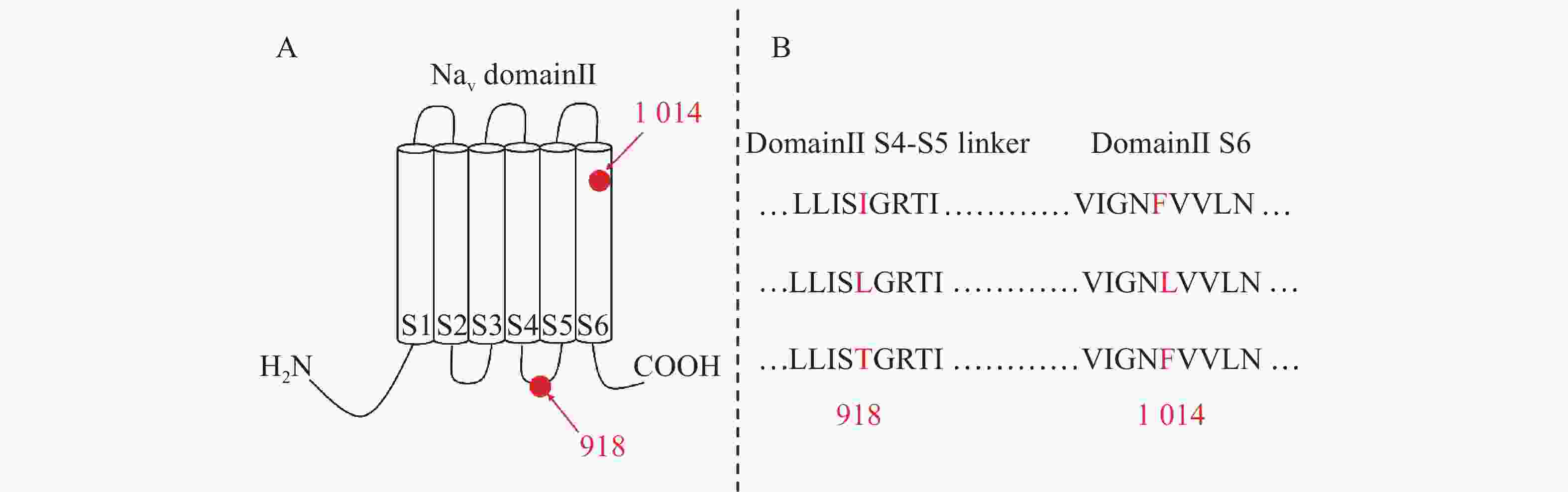
      Figure 1.  Three interlock patterns at the sites 918 and 1014 from the Myzus persicae

      种群
      Popu
      lation
      连锁模式
      Interlock
      patterns
      突变位置
      Mutation
      in region
      虫数/头
      Insect
      number
      突变数
      Mutation
      in number
      突变频率/%
      Mutation
      frequency
      海口
      Hai
      kou
      I-FDomainII
      S4−S5
      Linker,
      DomainII
      S6
      10330
      L-L770
      T-F00
      儋州
      Dan
      zhou
      I-F10550
      L-L550
      T-F00
      三亚
      San
      ya
      I-F10440
      L-L550
      T-F110

      Table 9.  Mutation of three interlock patterns of sodium channels at the sites 918 and 1014 from the M. persicae field populations

    • 本研究对海南省桃蚜田间种群进行三年持续的抗药性监测,发现海口、三亚和儋州三个地区的桃蚜种群对高效氯氟氰菊酯的抗性水平最低,而对联苯菊酯的抗性最高,且整体抗药性水平呈上升趋势。对比海南其他害虫对拟除虫菊酯类药剂的抗性趋势,袁琳琳等[36]的研究结果显示海口、乐东和三亚种群的普通大蓟马对甲氰菊酯和氯菊酯的抗性也逐年增强,这与本研究监测海南省桃蚜对拟除虫菊酯类药剂的抗性趋势一致,表明海南地区害虫对拟除虫菊酯类药剂的抗性普遍呈增强态势。同时,陈青等[37]发现海南崖城和金江两地区豇豆蚜虫种群对三氟氯氰菊酯和氰戊菊酯的抗性倍数也达到中等水平。汤秋玲等[38]在2011—2014年共监测了中国11个省市62个桃蚜田间种群,发现这些种群对高效氯氰菊酯抗性倍数为最高472倍,对氯菊酯产生了15.3倍至123倍的中高等抗性水平,对溴氰菊酯和联苯菊酯也产生不同程度的抗性,抗药性也呈现逐年上升趋势。

      从分子机制的角度来看,昆虫电压门控钠离子通道氨基酸的突变会导致昆虫对拟除虫菊酯类药剂的敏感性降低[39]。本研究检测2022年三个桃蚜田间种群的钠离子通道Domain Ⅱ区域发现,海南三个地区两个经典氨基酸突变位点918与1014同样出现“I-F、T-F、L-L”突变连锁现象,与Wang等[34]在桃蚜上发现的三种连锁形式一致,这个结果表明桃蚜突变连锁现象并非偶然,具有普遍性。结合2022年三个种群生测数据来看,不同突变连锁情况对菊酯类药剂有选择性抗药性。海口、儋州、三亚对联苯菊酯LC50分别为951.704、135.599、126.377 mg·L−1,而“L-L”连锁突变频率分别为70%、50%、50%,二者变化趋势一致。三个种群对溴氰菊酯LC50分别为278.746、303.838、189.402 mg·L−1,而“I-F”连锁形式突变频率分别为30%、50%、40%,二者变化趋势也一致。同样,三个种群对高效氯氟氰菊酯的抗性趋势与“T-F”连锁形式突变频率变化趋势也相同。因此,不同突变连锁形式可能会对菊酯药剂具有针对性抗性,但这一结果还需使用电生理技术进一步验证。

      MacKenzie等[40]在加拿大桃蚜种群发现I935M和I936V突变,并且电生理实验证明I936V突变能够影响钠通道的药剂敏感性[41]。然而,本研究在海南种群中并未发现F979S、I935M和I936V等突变情况,可能是由于地理位置和对药剂的抗性倍数不同。在2022年三个桃蚜田间种群中并未TipE基因突变,原因可能是其序列具有高度保守性,Li[42]发现昆虫TipE是一个非常保守的基因家族。使用哺乳动物β亚基和昆虫钠通道辅助亚基的序列形成的系统发育树中,桃蚜TipE与同目昆虫的TipE单独聚为一支[43]。这些结果都表明了桃蚜辅助亚基TipE基因具有高度保守性。

      综上所述,桃蚜对拟除虫菊酯类药剂的抗性发展是一个复杂的过程,涉及田间用药实践、分子机制及环境因素的多重影响。目前桃蚜对菊酯类药剂抗性呈现上升趋势,还应在防治过程中采取综合管理策略。为延缓桃蚜对拟除虫菊酯类药剂的抗性发展,在防治实践中应采取综合防治策略。首先,应避免单一药剂的频繁使用,转而采用轮换用药和混合用药的方式,以降低桃蚜对特定药剂的抗药性选择压力。目前,三个种群对高效氯氟氰菊酯抗性水平最低,其中海口种群对高效氯氟氰菊酯抗性呈下降趋势,因此建议轮换使用高效氯氟氰菊酯来控制桃蚜种群数量。其次,可结合低毒、低残留的高效农药进行防控,并通过测定桃蚜及其天敌的耐药性,筛选出对天敌影响较小但对桃蚜高效的适宜药剂浓度[44]。此外,矿物油喷雾剂的应用也值得推广。矿物油喷雾剂通过物理作用机制(如形成油膜)可有效减少桃蚜种群数量,同时阻断病毒传播途径[45]。在农业防治方面,轮作制度、抗性品种选育及田间卫生管理等手段可有效降低桃蚜种群基数。生物防治方面,桃蚜的天敌(如寄生蜂和瓢虫)在控制桃蚜种群中发挥了重要作用。例如,异色瓢虫和龟纹瓢虫对桃蚜具有较强的捕食能力,而菜叶蜂(俗称小菜蜂)等寄生蜂也能显著减少桃蚜种群数量[46]。这些生物防治方法不仅对环境友好,还能实现桃蚜种群的持续控制。另外,本研究提出桃蚜“L-L”、“I-F”和“T-F”三种连锁突变形式与不同菊酯药剂的抗性水平呈现一致的变化趋势这一新的见解,可为进一步研究桃蚜对菊酯药剂抗性机制提供新的思路。

Reference (46)

Catalog

    /

    DownLoad:  Full-Size Img  PowerPoint
    Return
    Return